Hospitality Training 360 Report
2026
Sponsored by
.svg)

%201.avif)



.avif)

Training & Operations Benchmarks from 30,000+ Locations

See how L&D teams are tackling today’s biggest training challenges
Learn how to make the case for budget increases
Benchmark your program against industry peers
Training & Operations Takeaways
Top 8 takeaways from the 2026 Hospitality Training 360 Report, based on insights from nearly 200 restaurant and hospitality leaders representing more than 30,000 locations.
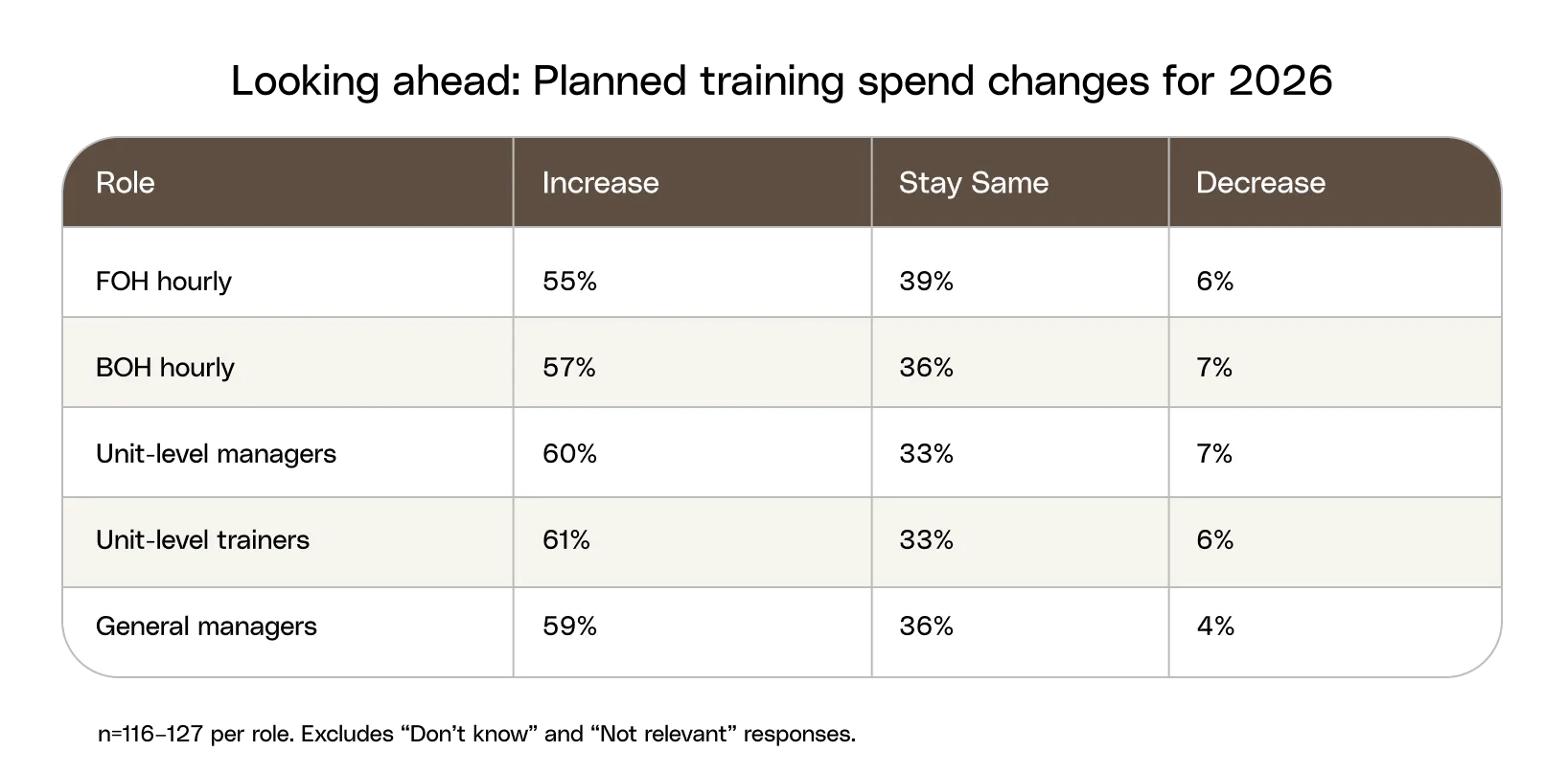
Between 55–61% expect training budgets to rise
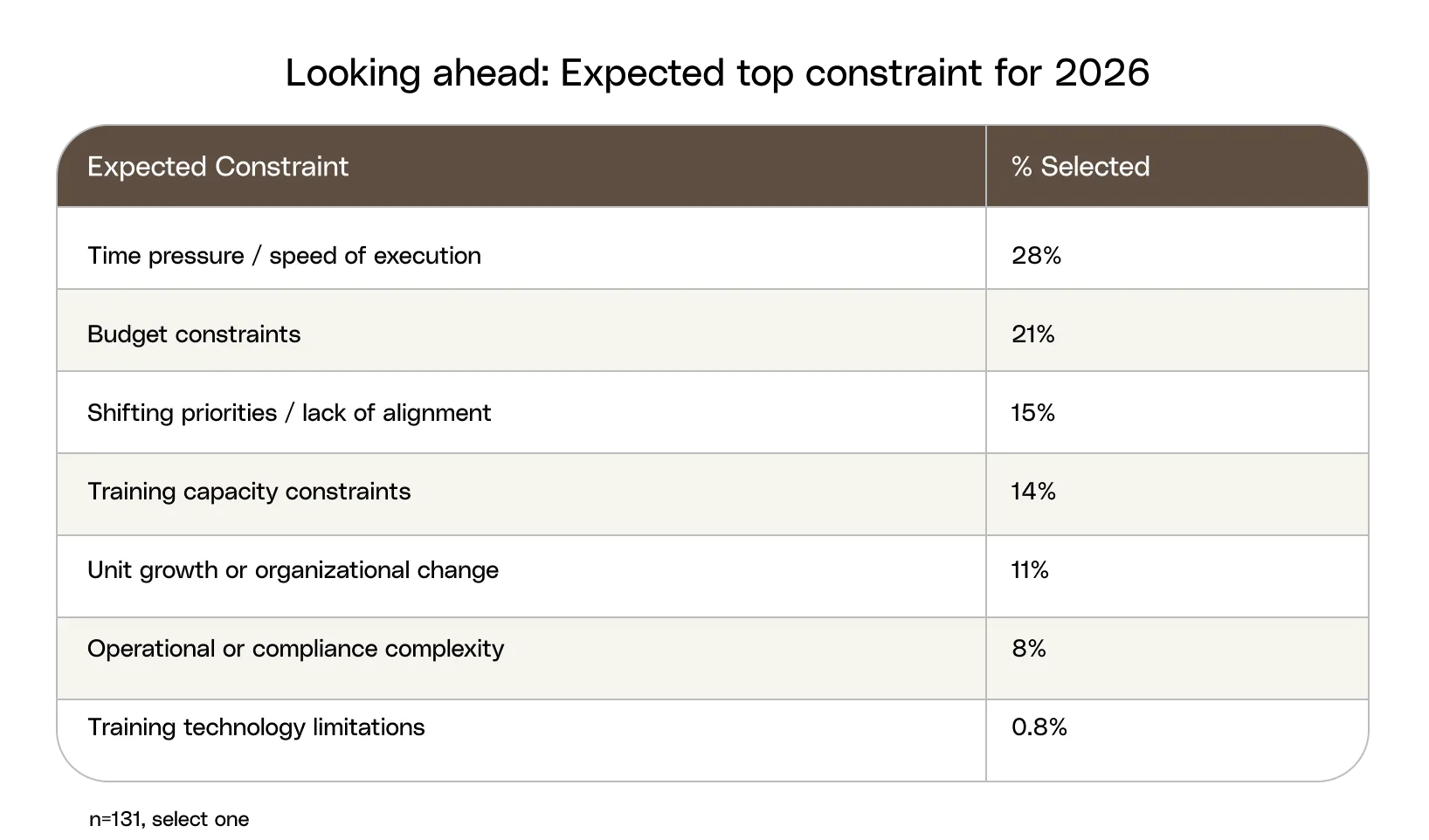
Time pressure will be the #1 constraint in 2026
26% are prioritizing consistency over customization — without falling behind
Training is shifting to field leaders — but support needs to follow
The metrics most teams track rarely hold up in a budget conversation
Practical tactics like job aids, peer coaching, & reused content endure even in lean times
AI proficiency has risen 16 percentage points YoY, with advanced use cases rising
Growth in AI use & hands-on training reflects need to balance tech with a human touch
Featured spotlight




Download to see full findings & survey responses
Oops! Something went wrong while submitting the form.
Takeaway 1
Are training budgets increasing in 2026?
Training investment in hospitality is rebounding. In 2025, 41–55% of L&D leaders reported increases in training budgets, depending on role. In 2026, that figure rises to 55–61%, as operators reinvest in fundamentals, open new locations, and leverage AI to create capacity for more training.
Takeaway 2
What is the biggest constraint facing training teams in 2026?
Even as training budgets rise, time pressure and speed of execution remain the biggest constraints for hospitality training teams. Respondents report that increasing operational complexity — including multi-unit growth and compliance requirements — is making it harder to deliver training programs quickly enough to keep pace with operations.
Takeaway 3
Are we at risk of falling behind if we're getting back to basics?
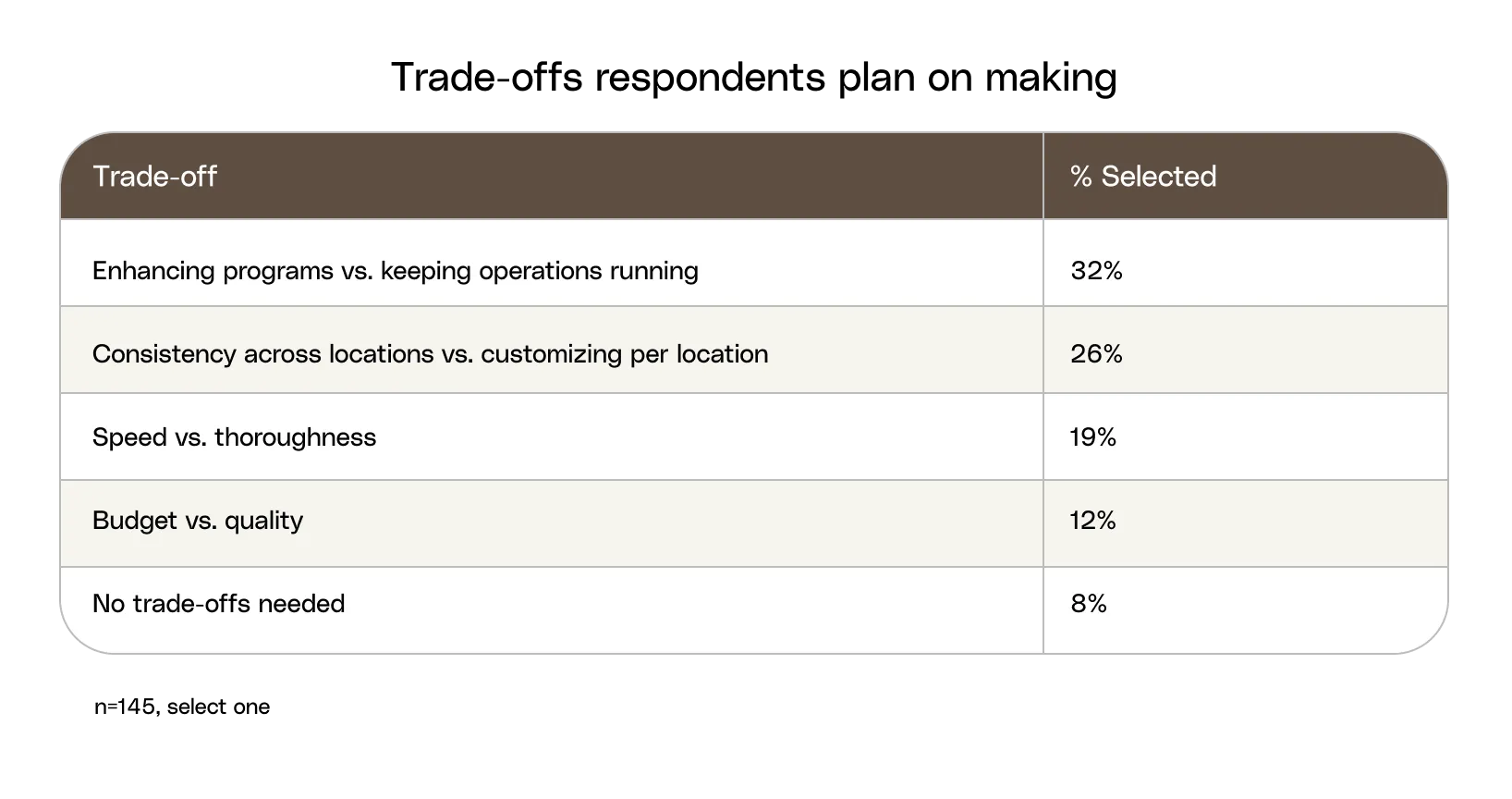
Some hospitality training leaders are intentionally slowing down the pace of customization. About 26% of L&D professionals say they are prioritizing consistency in training programs, choosing standardized content that can scale across locations rather than building highly customized materials for every role or store.
Takeaway 4
Who is responsible for training today — corporate L&D or field leaders?
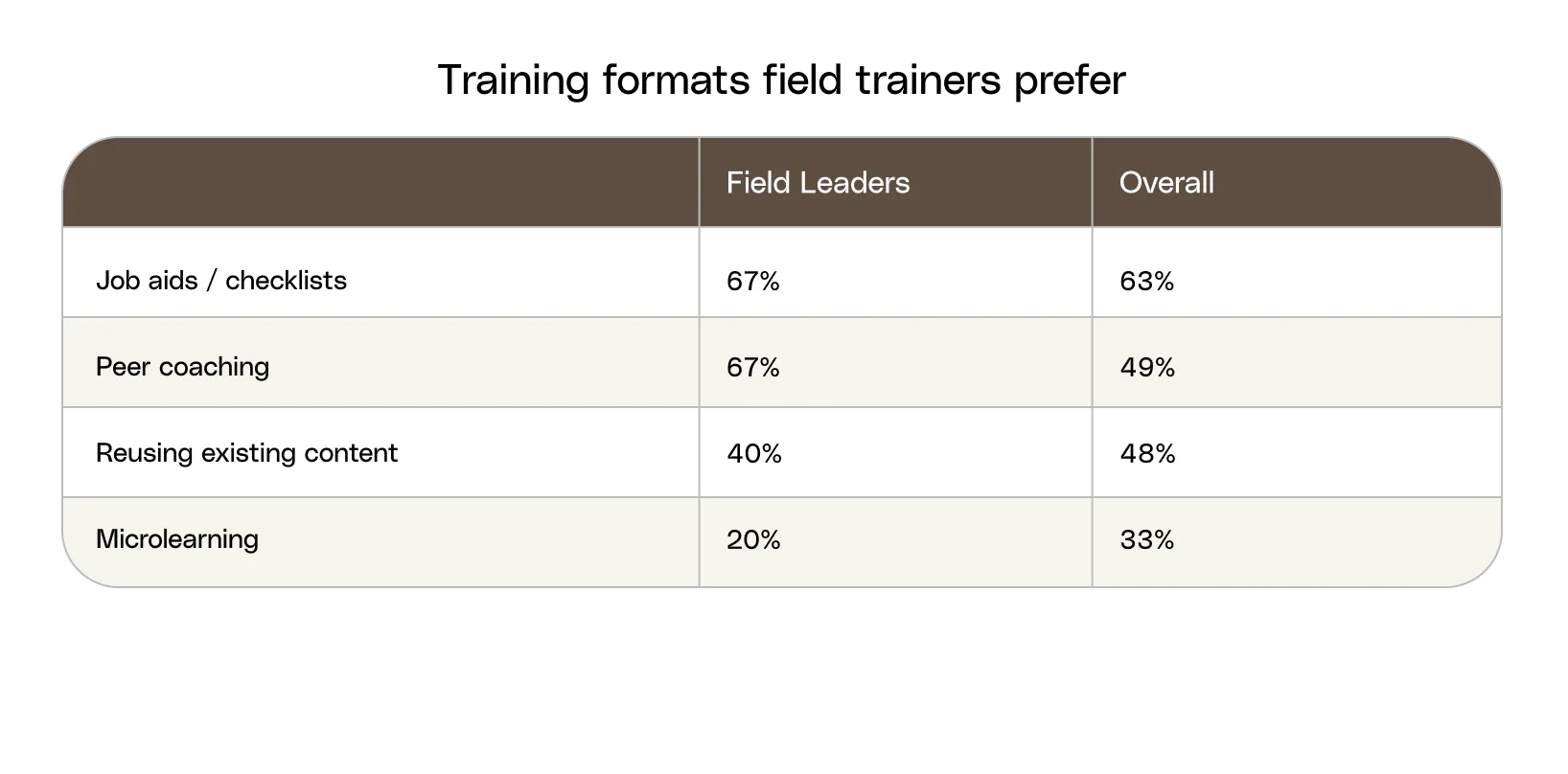
Restaurant training is increasingly shifting to field teams. As this transition happens, practical tools such as job aids, operational checklists, and peer coaching are becoming essential. But these approaches succeed only when corporate L&D provides the infrastructure and support to make them work, or risk shifting the burden.
Takeaway 5
How do hospitality teams measure the impact of training?
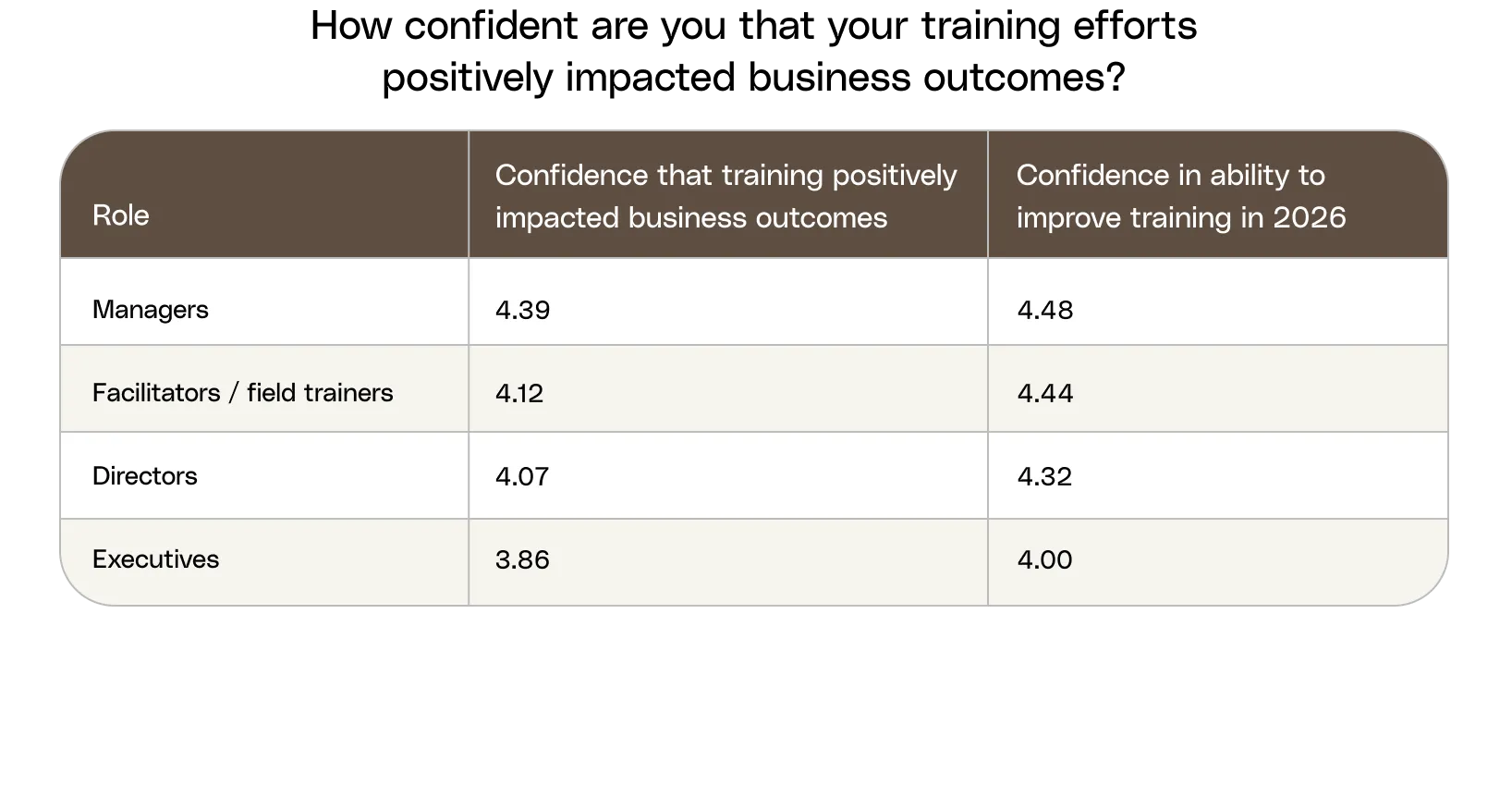
Many hospitality training teams believe their programs improve performance, but proving that impact remains a challenge. Most L&D leaders rely on soft indicators like manager feedback (81%) to evaluate training effectiveness, while the metrics executives find most convincing — like time-to-proficiency and operational errors — go under-measured.
Takeaway 6
What training tactics work best when budgets are tight?
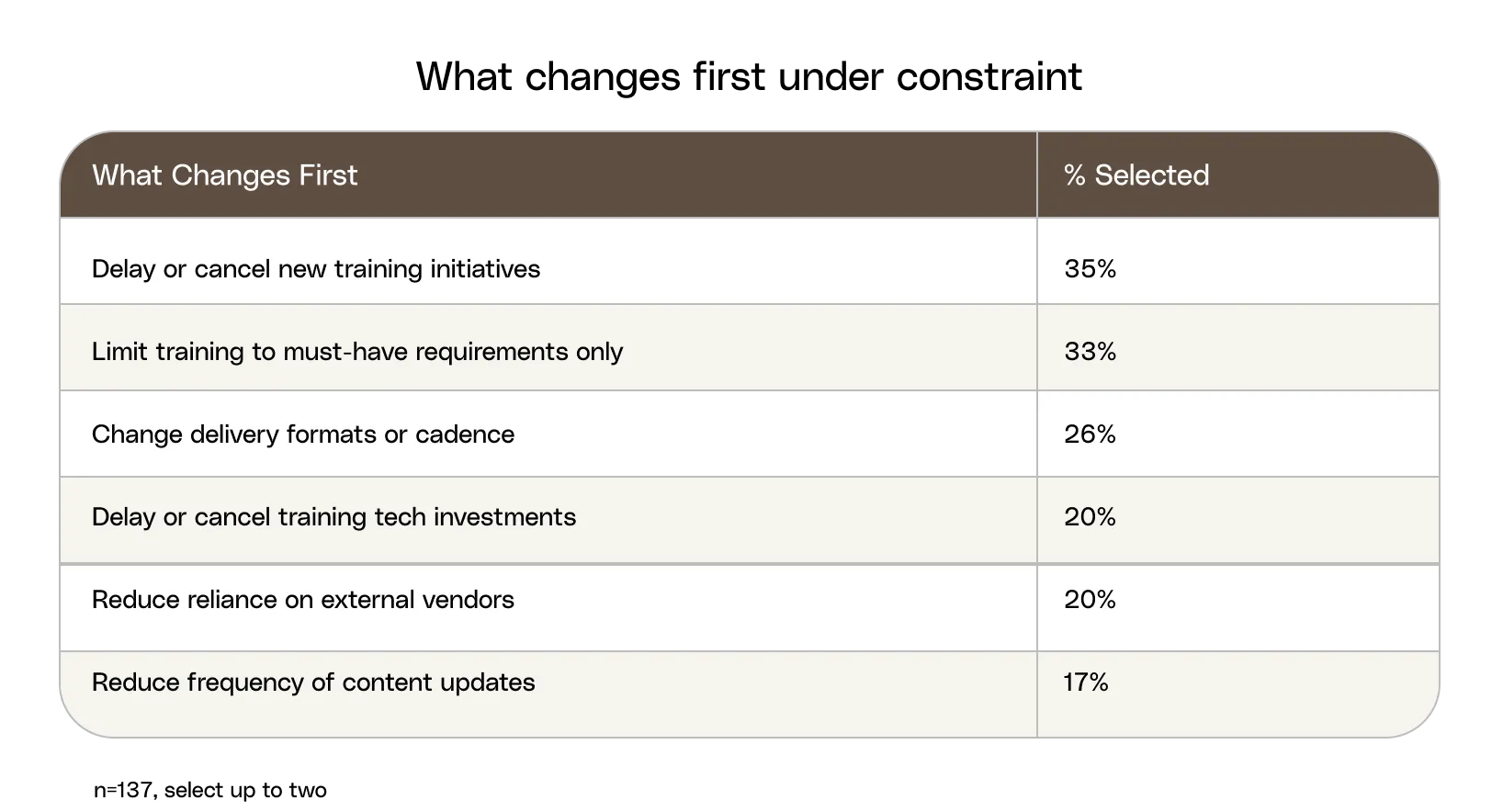
When training budgets tighten, hospitality teams often pause new initiatives. Instead, they focus on practical, scalable tools that support frontline execution: job aids and checklists (63%), peer coaching (49%), and repurposed training content (48%). These approaches let teams keep supporting operations without requiring significant new investment.
Takeaway 7
How are hospitality training teams using AI in 2026?
AI adoption among hospitality L&D professionals is accelerating. About two-thirds now report being regular or advanced AI users, up from 41% in 2025. While training content development remains the most common use case, more teams are applying AI to strategic planning, learning analytics, and program design.

Takeaway 8
How should training teams balance AI with hands-on learning?
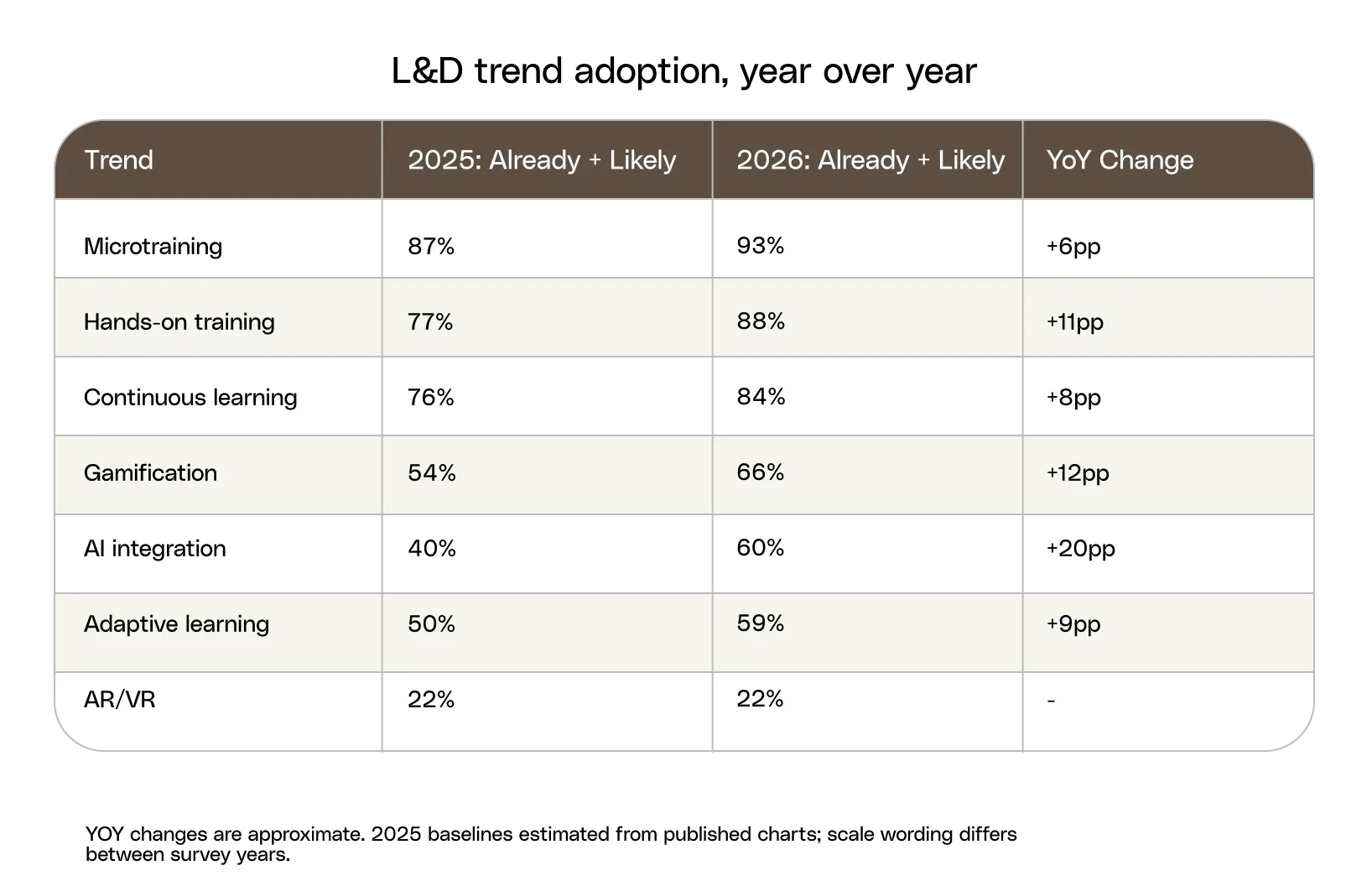
Hospitality training teams are increasingly blending AI-powered tools with hands-on learning. While AI adoption increased 20 percentage points year-over-year, hands-on training also grew by 11 points. The findings suggest that the most effective training programs combine technology with human coaching rather than replacing it.