

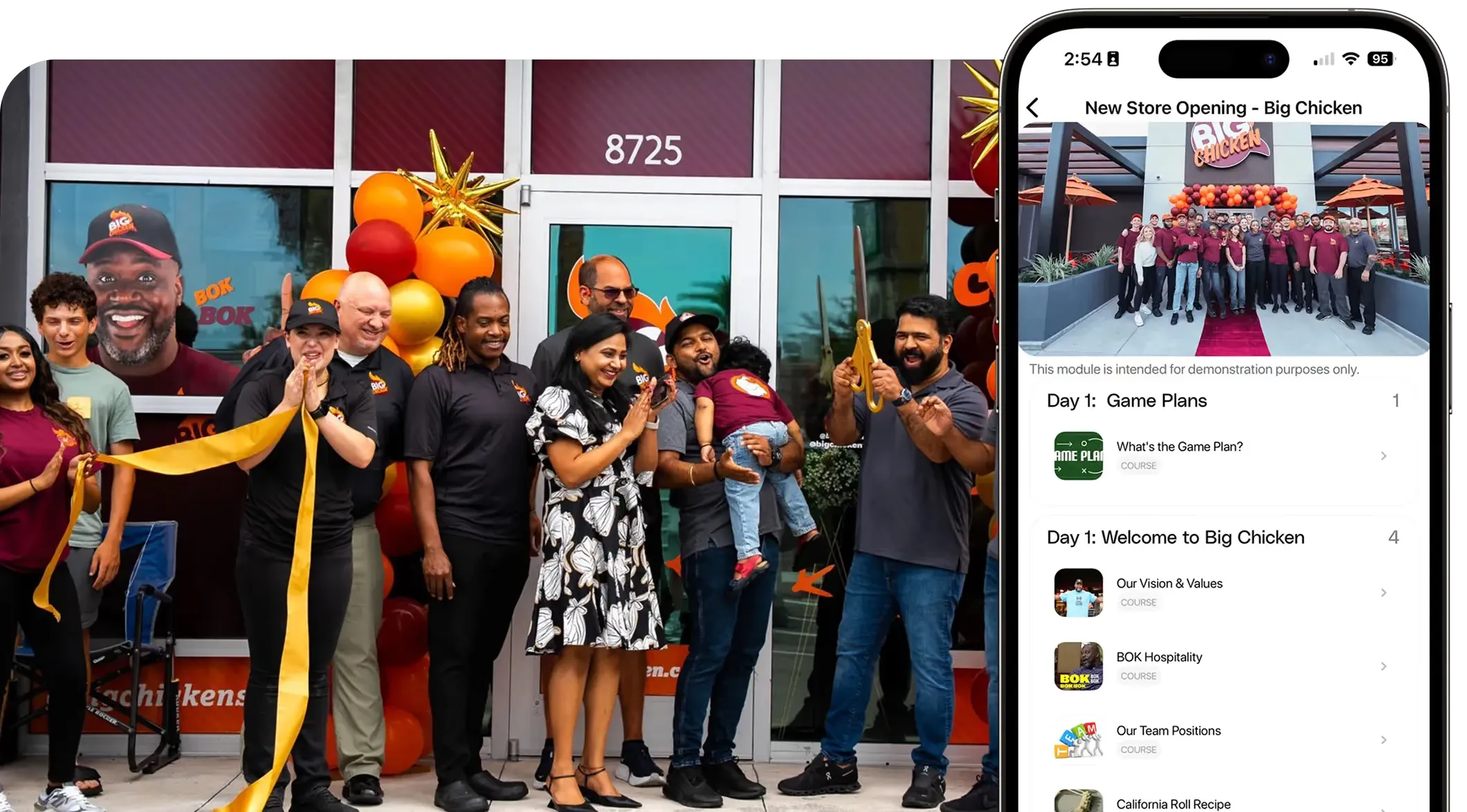
How Opus helps streamline new store openings
Traditional training overwhelms teams with marathon sessions. Opus combines pre-learning with in-person validation, so your new store becomes productive faster.
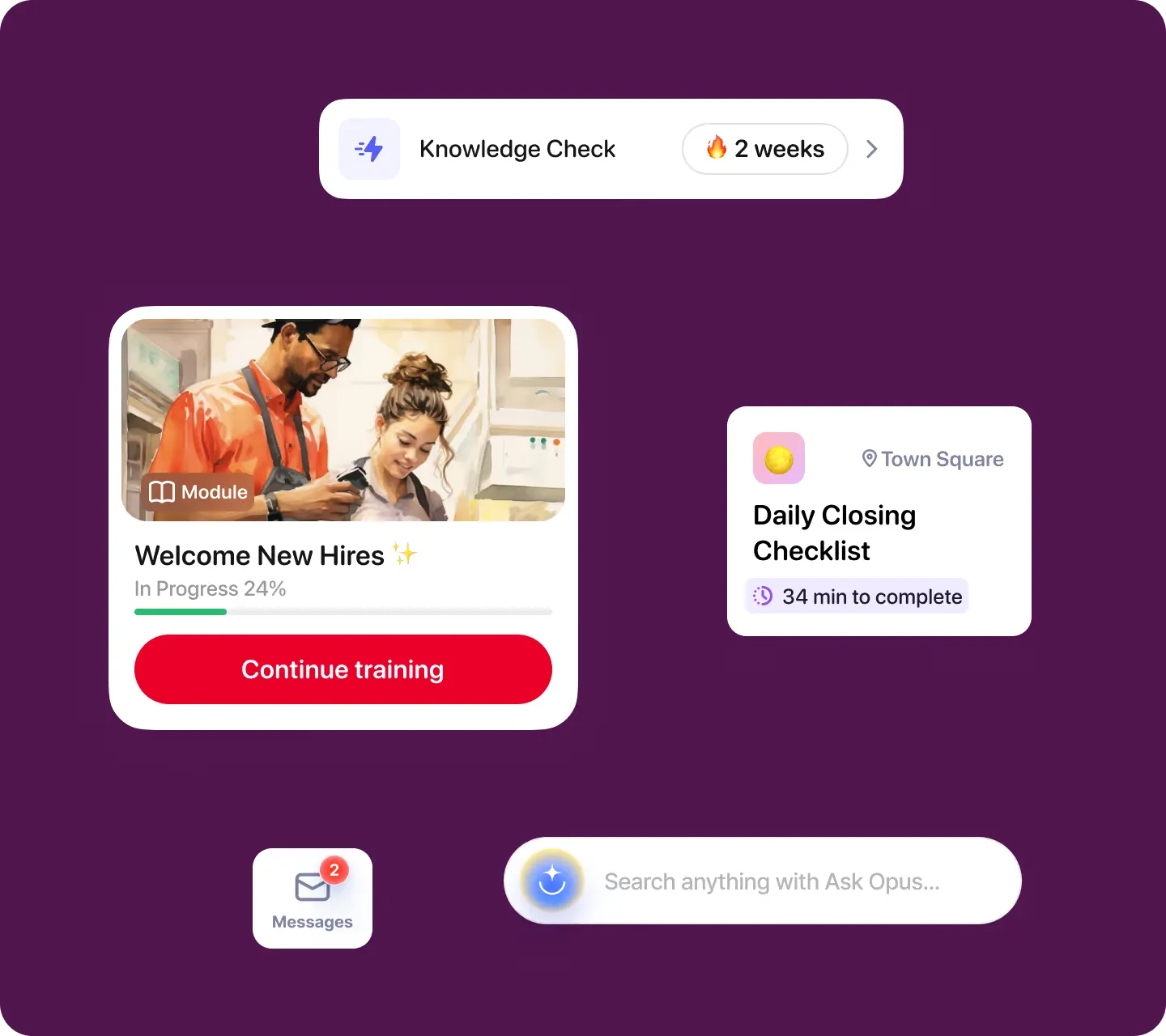
Built for how you operate
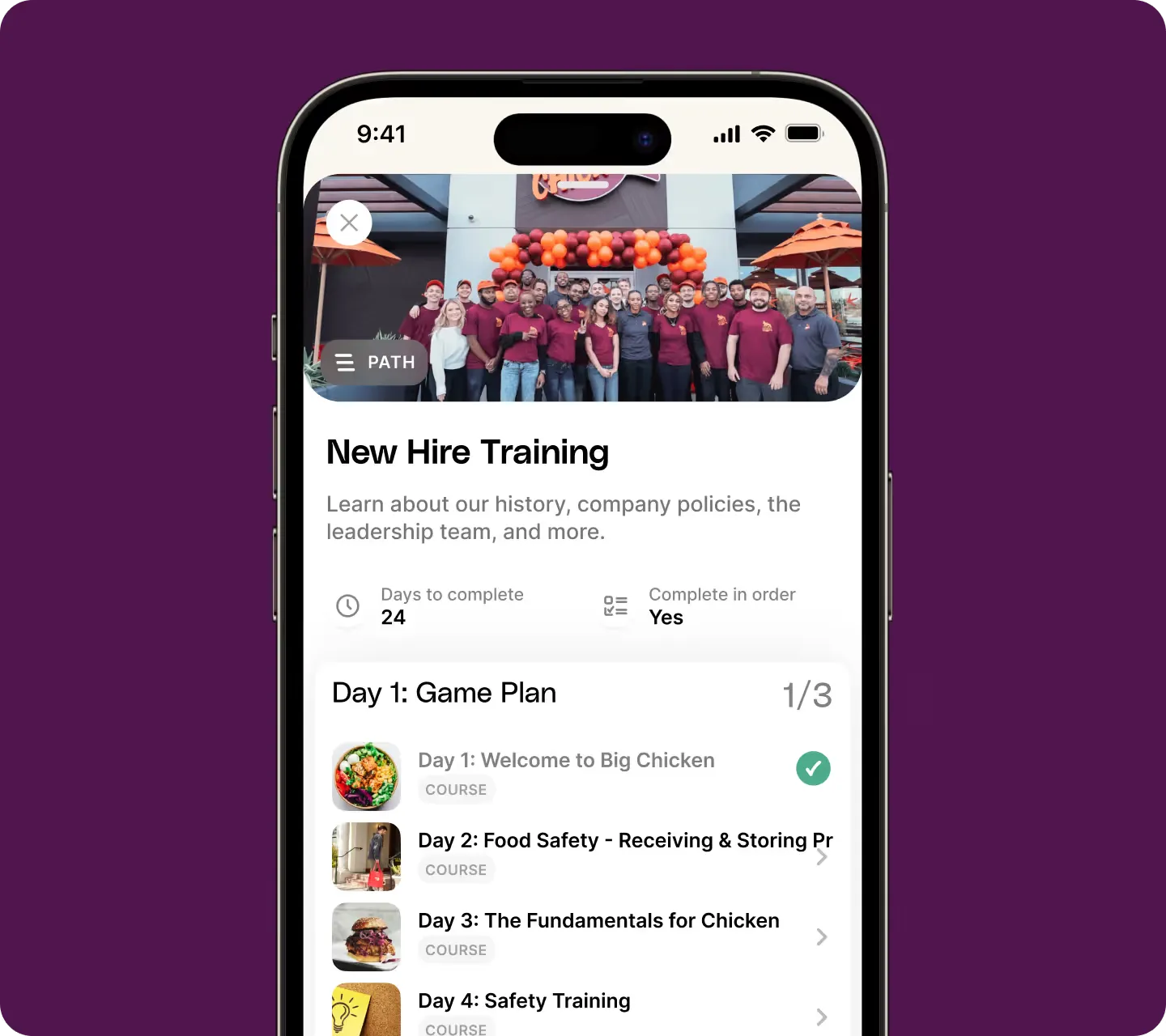
 Quick-Service RestaurantBig Chicken — Trainer-led approach with self-paced materials cut training time from 10 days to 7, across 40+ new location launches.See Big Chicken's NSO game plan
 Pet CareSparkle Dog Grooming — Reduced 3 days of content into 1.5 hours of focused NSO training, making openings more effective without overwhelming new teams.
 speciality ice creamSalt & Straw — A five-phase NSO playbook and expanded training team supports openings in new markets like NYC.Read on
 Drive-Thru CoffeeClutch Coffee — Keeps onboarding consistent across 14 locations with a flexible training system built for rapid growth across the Carolinas.See Clutch Coffee's approach
The complete training operations platform
Everything your team needs to train, work, and grow—in one place
Frequently asked questions
How long does new store opening training take with Opus?
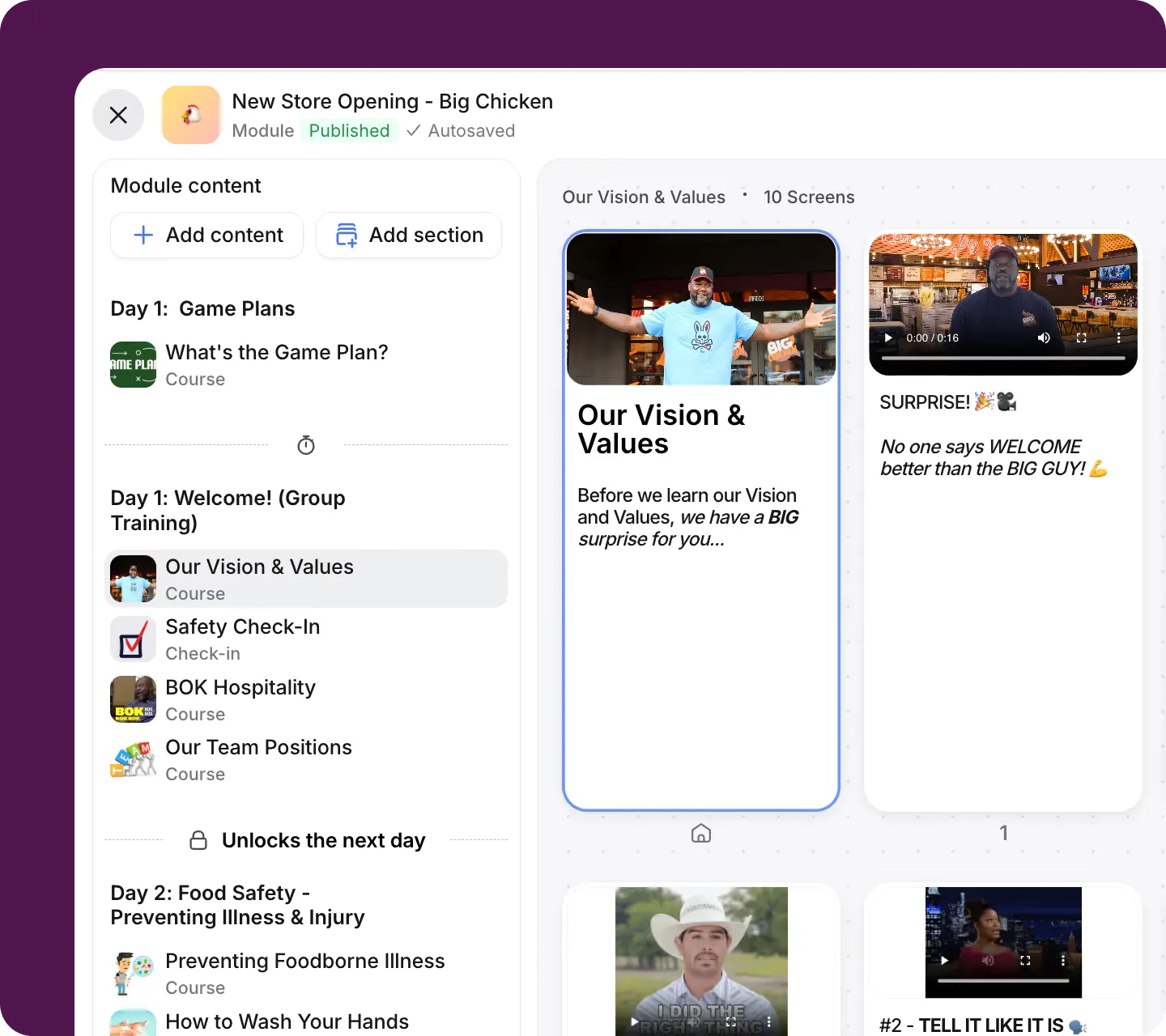
Most customers structure NSO training in 7-10 days depending on concept complexity. Big Chicken gets QSR teams floor-ready in 7 days using pre-learning + intensive in-person sessions. The combination of mobile courses before arrival and manager-led check-ins during opening week means teams spend less time in "training mode" and more time serving guests with confidence.
What's the difference between prescriptive and flexible NSO programs?
Prescriptive programs work best when you've refined your process and want repeatable results — think exact schedules, milestones, and checklists that every location follows. (Big Chicken’s structured 4-day NSO training is an excellent example). Flexible programs accommodate the reality that construction delays, equipment arrivals, and staffing vary; training adapts to actual conditions while maintaining standards. (Clutch Coffee’s check-in-based onboarding offers this flexibility.) Most brands start flexible and become more prescriptive as they scale.
How does pre-learning change group training sessions?
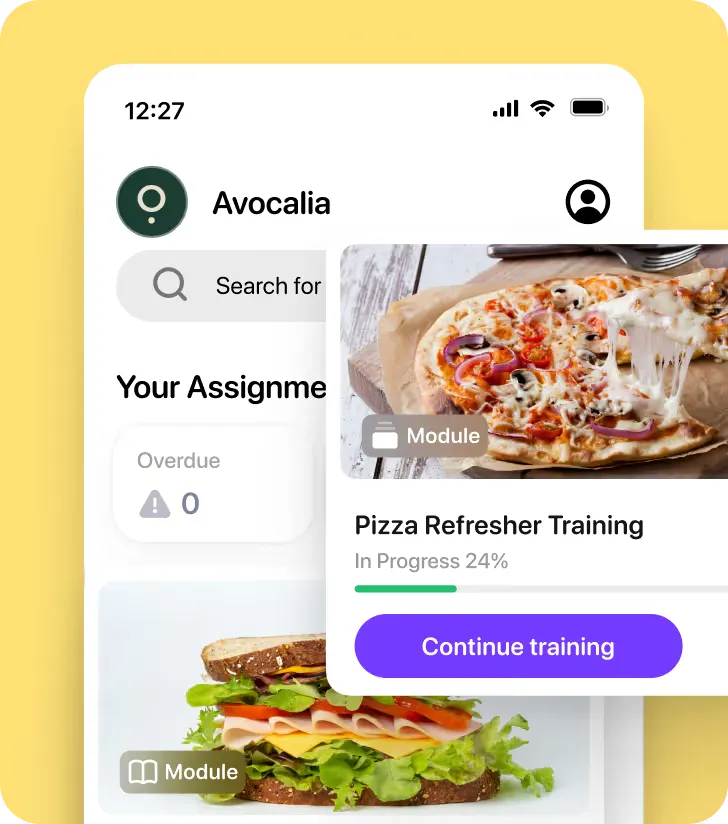
Pre-learning moves foundational knowledge (brand history, menu basics, POS introduction) to mobile courses team members complete at home. This means your expensive in-person group sessions focus on higher-value activities: practicing skills together, building team chemistry, asking questions, and getting real-time coaching. Teams arrive to opening week already knowing the "what" so you can focus on the "how."
Can we track who's ready before opening day?
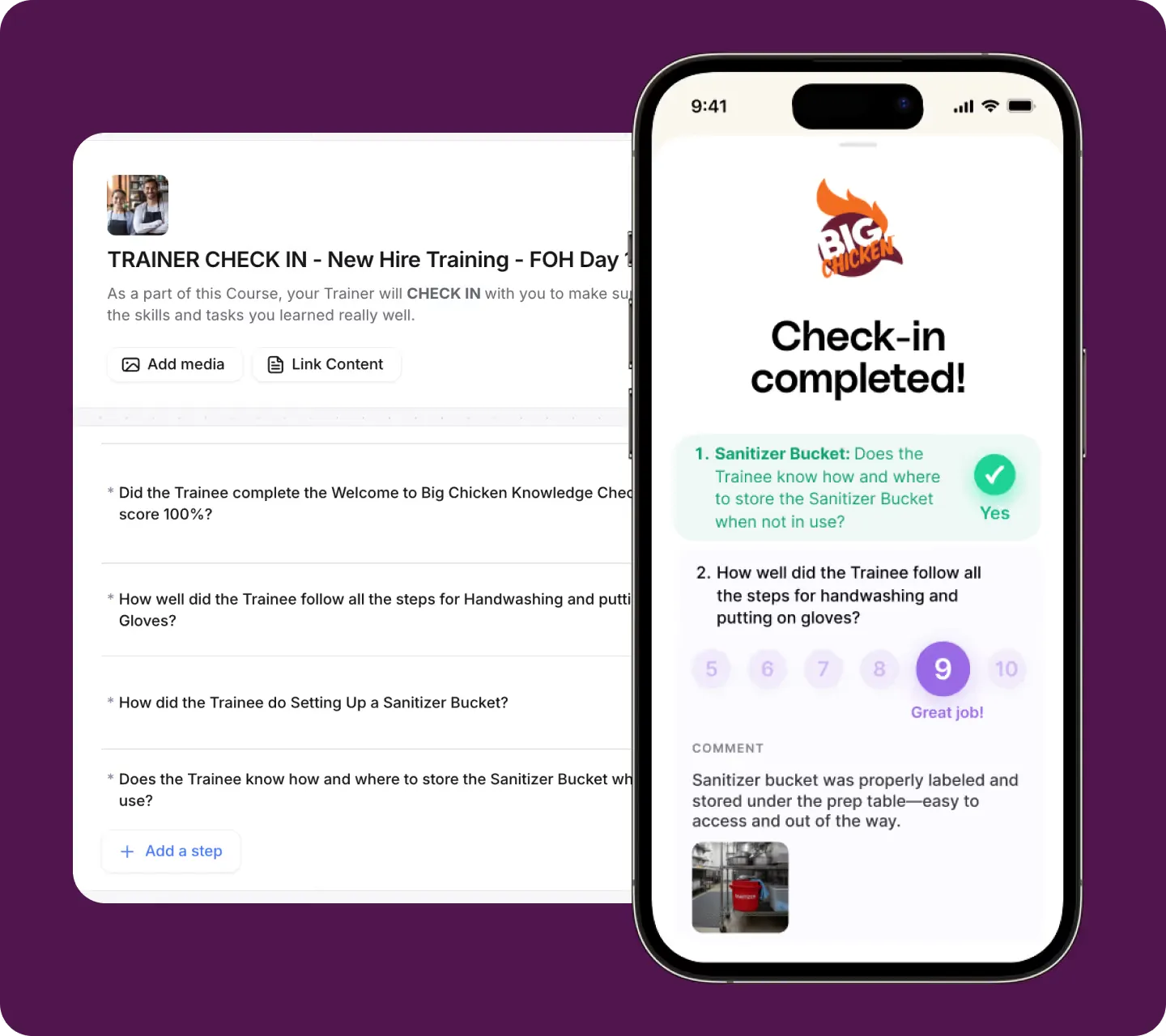
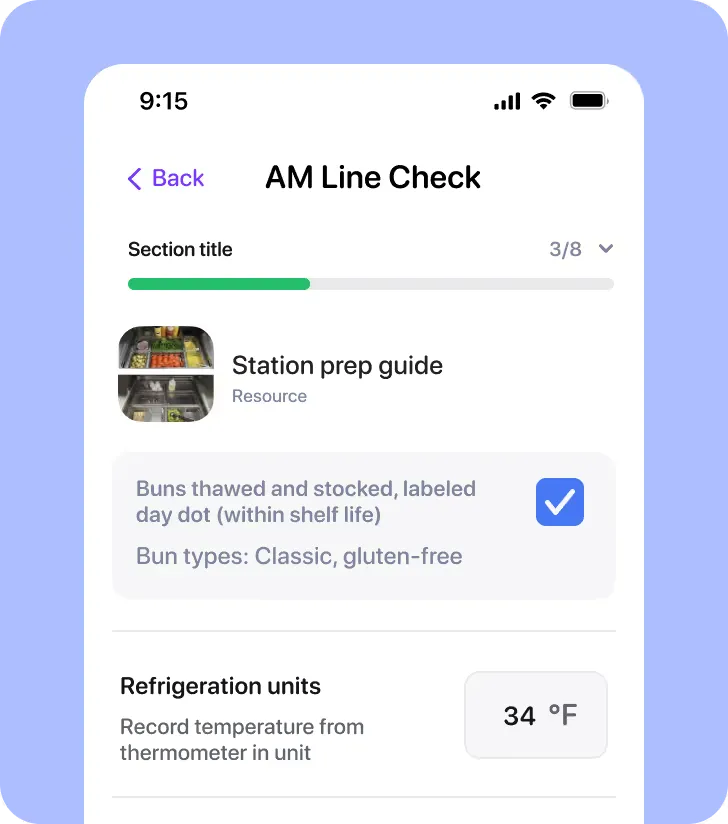
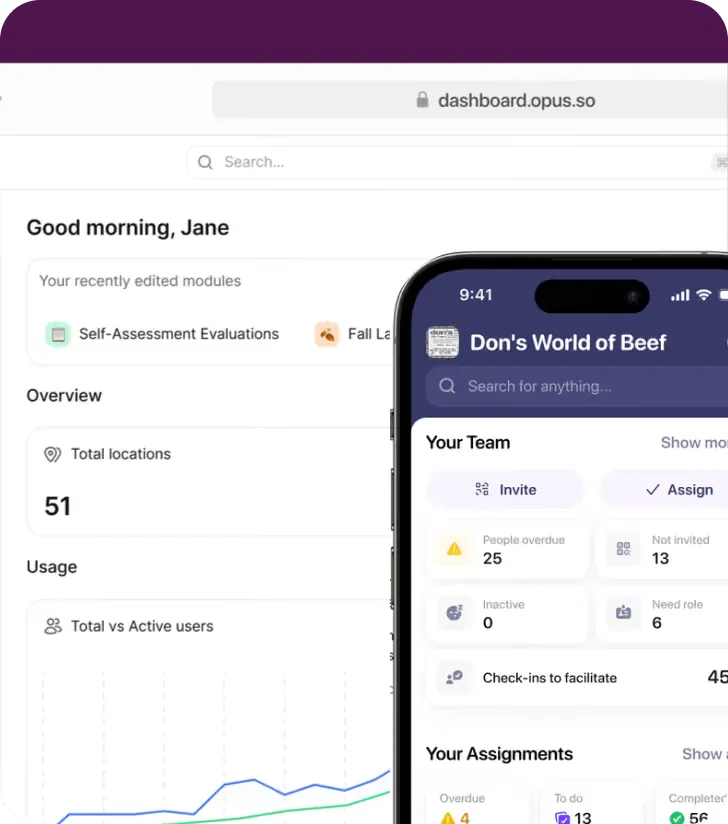
Yes. Managers use in-person check-ins to verify each team member can perform required tasks—from proper handwashing to taking orders under pressure. The dashboard shows exactly who's passed each skill and who needs additional coaching, so you make staffing decisions based on readiness, not assumptions. No one works opening day without proven competency.
What if opening dates slip or team members start at different times?
Training adapts to reality. Each person follows their role-based path starting from their actual hire date, so staggered starts aren't a problem. Managers can begin training weeks before crew members, and everyone still gets the right content in the right sequence. Opus allows you to time-gate training to match your timeline, or keep it flexible to adapt to shifting timelines and last-minute changes. Opus allows your training structure stays intact regardless of when new hires actually start.
How does Opus’s approach differ from live group training only?
Traditional opening training often relies on long, back-to-back group sessions that are tiring and assume perfect attendance. Opus enables training teams to take a blended approach, with foundational learning completed independently before in-person sessions begin. Group time is used more effectively—for practicing skills, reinforcing knowledge, and building team readiness—while giving you clear visibility into who is prepared.