

Restaurant Server Training Program: What to Include and How to Train Servers Fast
For multi-location restaurant groups: the eight things every server program covers, a five-shift schedule a 29-location group uses, and how to keep sign-off the same in every store.

Rachael NemethCo-founder & CEO
8 min read
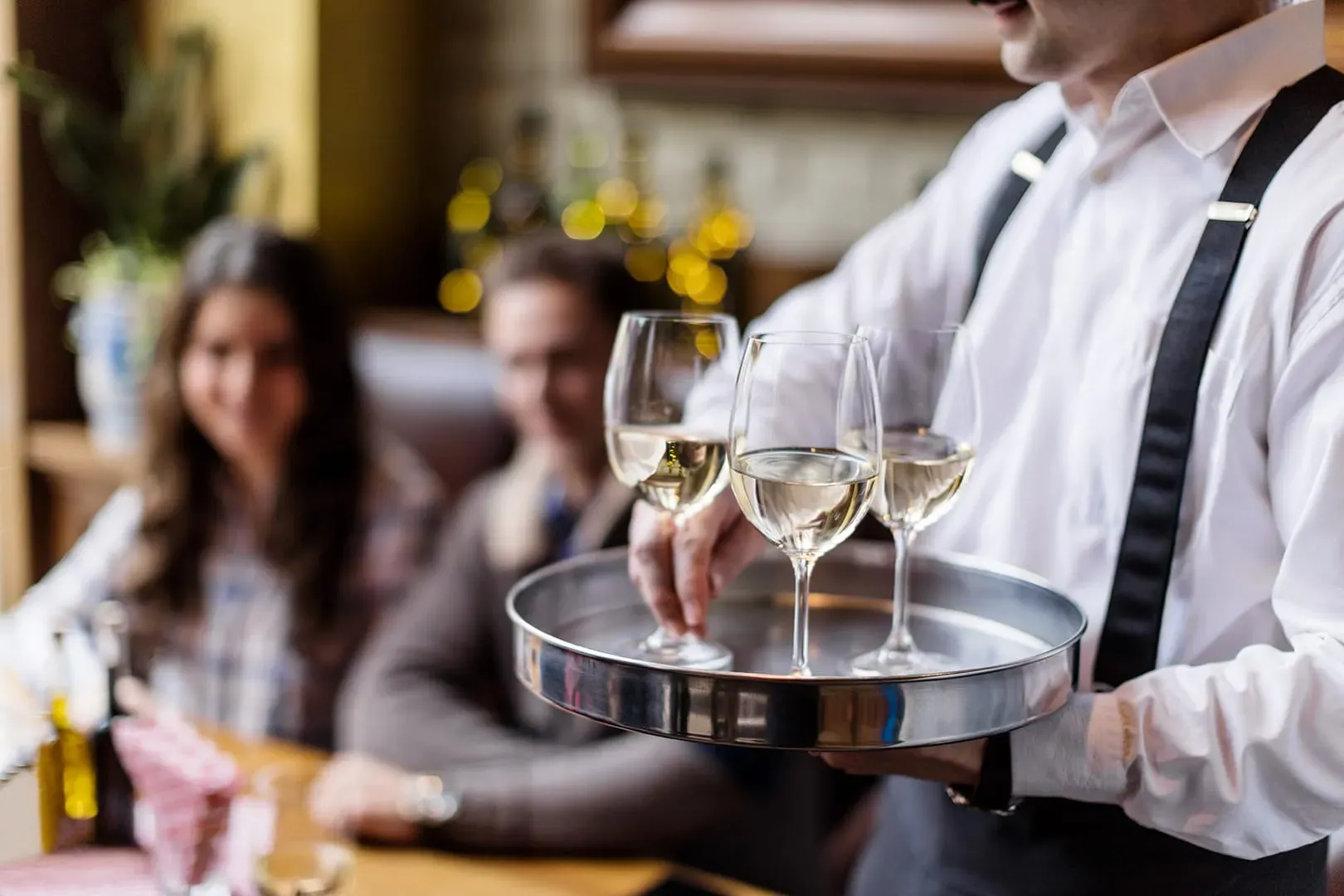
A restaurant server training program should cover the steps of service, menu and allergen knowledge, drinks and responsible alcohol service, the POS, sections and side work, and guest recovery, and it should end with a manager signing off each skill on the floor. Most full-service groups run it as a short series of follow shifts: Burtons Grill & Bar's 29-location group takes most servers through five shifts in about two weeks.
This guide is for operators who run more than one store and need every server trained to the same standard. It covers what to include, a schedule you can copy, how to train servers faster, and a checklist for sign-off.
What should a restaurant server training program include?
A complete server program covers eight things. Each one needs something to learn and a way to check it on the floor, not only in a quiz.
- Steps of service. Greeting, drink order, recommending, taking the order, checking back, pre-bussing, presenting the check and the goodbye. Teach them in the order a guest experiences them, one step at a time.
- Menu, ingredients and allergens. What's in every dish, how it's prepared, what can be modified, and which allergens it contains. For an allergy-forward brand, this is a safety topic as much as a service one.
- Drinks and responsible alcohol service. The beverage menu, pours, upselling, and how to check ID and refuse service. Where your state or city requires an alcohol server certification, include it and keep a record of who holds one.
- POS and order accuracy. Entering orders and modifiers, splitting checks, voids and comps, and the handoff to the kitchen and expo.
- Sections, side work and shift duties. Table numbers and section layout, opening and closing duties, and side work. These are easy to forget in training and easy to check with a checklist.
- Hospitality and guest recovery. How your brand greets, reads a table, and handles a complaint or a mistake. Show it on video before you ask a new server to do it.
- Food safety and hygiene basics. Handwashing, glove and utensil use, plate handling, and what to do when a guest reports a reaction. Add the food handler card where local rules require one.
- Final sign-off. A manager or certified trainer watches the server run a section and confirms each skill. Without this step, "trained" only means "finished the course".
How long should server training take?
Plan the length by how fast a server can run a section on their own, not by the calendar. Burtons Grill & Bar's program is a good model: orientation first, then five follow shifts, each with a defined purpose, then a management sign-off.
| Stage | What the server does | What the trainer checks |
|---|---|---|
| Before shift 1 | Studies the menu guide and orientation lessons; Burtons schedules new hires 30–45 minutes early for this | Lessons and quizzes completed |
| Shift 1 | Full passive shadow | Has the mental model of the shift before touching a table |
| Shift 2 | Server assistant: drinks and support tasks | Drink service and support duties |
| Shift 3 | Greets tables and steps into hospitality moments with the trainer alongside | Greeting and hospitality behaviors |
| Shift 4 | Takes a table through full steps of service with fewer prompts | Every step of service, trainer hands-off |
| Shift 5 | Runs an independent section of 2–3 tables, with the trainer shadowing | Section management and pacing |
| Sign-off | Waits on a manager and a certified trainer or colleague | Full steps of service, allergen knowledge and hospitality |
At Burtons, each follow shift unlocks only after the trainer completes the previous shift's check-in, so no one skips a step and the training team always knows where each server stands. How Burtons runs FOH server training has the full module, and how to build front-of-house service training that changes behavior covers the coaching side.
What is the fastest way to train restaurant servers?
The fastest programs move knowledge out of the shift and keep the shift for practice. Five habits make the biggest difference:
- Start before the first shift. Put the menu guide, steps of service and allergen basics in short lessons a new hire can finish on their own phone, so shadow shifts aren't spent reading binders.
- Give every follow shift one job. "Shadow", "run drinks", "greet", "full steps", "own section" is faster than five shifts of general shadowing.
- Show, then do. A short video of each step of service sets the standard before the server tries it, and role-play with a trainer covers order-taking and closing out a table before a real guest does. Burtons' greeting lesson is four short videos and two quiz questions, about three minutes.
- Sign off on the floor at the end of the shift. The trainer watches the whole shift and completes the check-in afterward, so neither of them is on a phone at the table.
- Train in the server's language. A server who learns the menu in their first language gets to the floor faster and makes fewer mistakes.
What that looks like in published results:
- Newk's Eatery cut new-hire onboarding from about 24 hours through the POS to about 30 minutes; new hires scan a QR code and start in minutes.
- At PLANTA, 100% of new hires complete their onboarding training within their first five training shifts.
- Bahama Buck's new hires reach Level 3 in 4.5 months, 25% faster than the 6–12 months shops used to estimate.
- Just Salad cut the time to get a new store team ready from seven days to three.
How do you keep server training consistent across locations?
Server training drifts store by store unless the standard, the trainers and the sign-off are the same everywhere. Each location ends up with its own version of the steps of service, and guests notice.
- Write one standard, owned by one team. Corporate or the training team owns the steps of service, the menu guide and the sign-off. Stores deliver it; they don't rewrite it. PLANTA's Director of Restaurants put the old problem simply: "each one of our locations ended up doing things differently."
- Certify trainers in every store. The trainer carries the standard on the floor, so pick them deliberately and train them on how to run a follow shift, not just on the menu.
- Use the same sign-off everywhere. The same check-in for each follow shift and the same final sign-off, so "certified" means the same thing in every store. As PLANTA's Director of Training put it: "Opus has become the tool we use to verify that everybody is on the same page."
- Look at completion by store. A district or area manager should see which stores have servers stuck between shifts without asking for a spreadsheet.
- Plan for new stores. Define the minimum a server needs before opening day, train it before the doors open, and leave the rest for the first weeks.
- Keep training after sign-off. Menu changes, limited-time offers and service refreshers go out as short lessons, so the standard holds after the first two weeks.
Server training checklist
Use this as the skeleton of your sign-off. Each row is one skill, how you teach it, and how you know it stuck.
| Skill | How it's taught | How it's signed off |
|---|---|---|
| Steps of service | Short video per step, then follow shifts 3–4 | Trainer watches a full table, start to finish |
| Menu and ingredients | Menu study guide and quizzes before shift 1 | Spot questions on the floor; final sign-off with a manager |
| Allergens | Allergen lessons in orientation | Server walks through an allergy order end to end |
| Drinks and alcohol service | Beverage lessons; certification course where required | Certificate on file; ID check observed |
| POS and order accuracy | Hands-on in shift 2, with a trainer | Orders, modifiers and split checks entered without help |
| Sections and side work | Opening and closing checklists | Checklist completed for the section |
| Hospitality and guest recovery | Videos of the brand's greeting and recovery | Observed on the floor during shifts 3–5 |
| Food safety and hygiene | Food safety lessons; food handler card where required | Observed on the floor; card on file |
| Final sign-off | Management shift | Manager confirms each skill in the final check-in |
Where Opus fits
Opus Training runs this kind of program for multi-location restaurant groups: lessons and quizzes on the server's own phone, follow-shift check-ins a trainer completes on the floor, and checklists for side work, all in one app.
- A new hire signs up by scanning a QR code, with no email or password.
- Lessons, quizzes and video subtitles translate automatically into 100+ languages from one build.
- Managers and trainers sign off each follow shift with check-ins, and the next shift opens only after the one before it is checked off.
- Completion and sign-off show by store, so a district manager can see who's stuck without asking.
See how training works in Opus, read how blended learning pairs lessons with floor practice, compare Opus with other platforms, or read our roundups of restaurant training platforms and hospitality training platforms. To see it with your own server program, book a demo.
Frequently asked questions
How long does server training take?
Plan it by skills rather than days, and end with a manager sign-off. Burtons Grill & Bar takes most servers through orientation, five follow shifts and a management sign-off in about two weeks. Experienced servers can move faster if they pass each shift's check-in.
What should a new server learn on day one?
The menu, allergens and the steps of service, at least well enough to shadow without slowing the trainer down. Give new hires these as short lessons before their first shift, so day one is spent watching service, not reading a binder.
Do servers need alcohol service certification?
It depends on your state and city. Some require a responsible alcohol service certification for anyone who serves alcohol; others leave it to the employer. Check your local rules, include the course in training where it's required, and keep a record of who's certified and when it expires.
How do you test a server's menu knowledge?
Use a short quiz after the menu lessons, then ask spot questions on the floor during follow shifts: what's in a dish, what can be modified, which allergens it contains. The final sign-off should include walking through an allergy order from start to finish.
How do you train servers who speak another language?
Give them the same lessons and quizzes in their own language, and keep the floor training and sign-off the same for everyone. A platform that translates lessons automatically saves you from maintaining a separate binder for each language.
How do you train servers for a new restaurant opening?
Decide the minimum every server needs on opening day (steps of service, menu, allergens, POS), train it before the doors open, and run follow shifts in the first weeks. Using the same program and sign-off as your other stores keeps the new location's service consistent from day one.
This post was last reviewed and updated in November 2026.