Service training is one of the hardest things to get right in a restaurant. You can teach information, but teaching a server to read a table, anticipate a guest's needs, and recover gracefully from a difficult interaction? That's a different challenge—and it's where most training programs fall short.
This article is drawn from a live Opus Office Hours session featuring Jennifer Quirk, Director of Training at Burtons Bar & Grill. Join us for the next session →
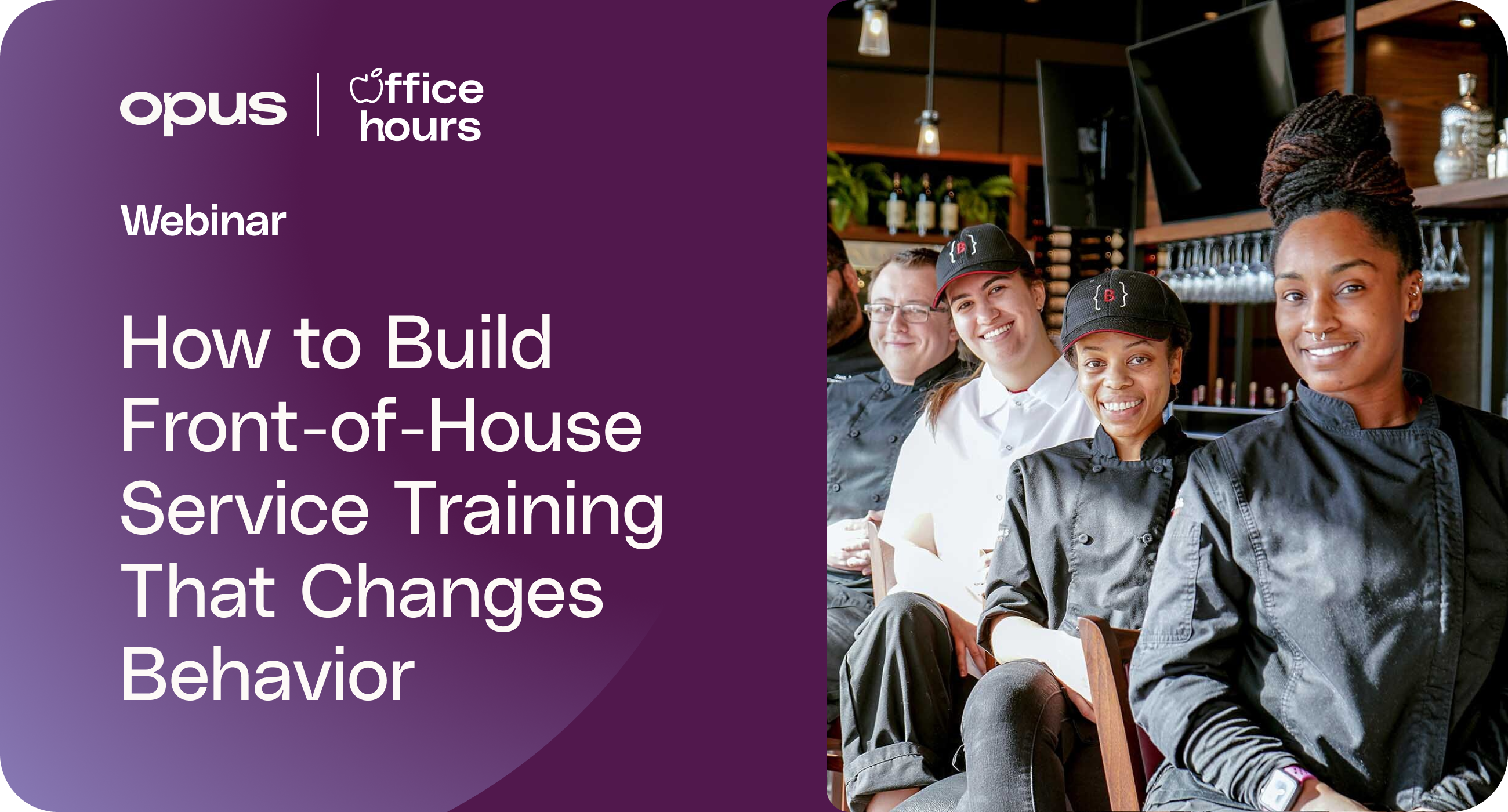
Jennifer Quirk has spent nearly twenty years building service training at Burtons Bar & Grill, a 29-location full service restaurant operating two distinct concepts. Over that time, she's developed a training system that takes new servers from passive shadow to certified floor team member in five structured shifts—with most completing the full program, including orientation and management sign-off, within two weeks. Here's what she's learned about making service training stick.
Define good service before you try to train for it
One of the most common service training mistakes is skipping straight to the "how" without establishing the "what." If your team doesn't have a shared definition of good service, every trainer will teach it differently—and consistency breaks down.
At Burtons, the answer is simple and repeatable: exceptional hospitality through consistency and anticipating guest needs. That definition filters into every course, every check-in, and every management shop. Team members don't just know the steps of service—they understand what they're working toward.
Before you build a single module, write down how your business defines good service. Make it specific enough that two different managers would describe it the same way.
Build the training progression around the guest experience
Burtons' server training follows the guest journey—from the moment someone walks in, through every touchpoint, to when they leave. That structure gives trainees a frame for why each skill connects to the one before it. They're not learning a list of tasks. They're learning to orchestrate an experience.
Trainees complete videos and courses in Opus for each follow shift before they practice live—stacking knowledge one phase at a time. Each shift has a clear role for the trainee, progressing from full passive shadow to running an independent section by shift five. By the time they hit the floor solo, the standard has already been set digitally.
Menu knowledge sits at the center of this. Burtons is a deeply allergen-conscious brand—guests with dietary restrictions rely on their servers to know what's in every dish, not just the obvious ones. That makes menu training a safety issue as much as a service one, and it shapes how much emphasis the program puts on ingredient knowledge before a trainee ever takes a table.
Use short videos to set the standard—then reinforce it live
One of the clearest takeaways from the session: short videos outperform long ones, especially for soft skills. Burtons course videos range from 12 second to 1 min. Each video covers one thing—how to greet a table, how to take a drink order—nothing more.
"You want them seeing those soft skills in action. They're seeing the smiles, the warm greetings. They understand that's the level we expect."
Short videos work because they're tied directly to what a trainee will practice on their next shift. The video sets the standard. The floor validates it—and so does the expo line. At Burtons, team members running food are quizzed in real time by expo staff: what is that dish, what cheese comes on it, does it always come with fries. It's informal, but it reinforces knowledge at exactly the moment it matters.
Make management engagement non-negotiable—even when you're delegating
A common failure mode in training: managers assign check-ins to trainers and step back entirely. Burtons actively counters this. While trainers can be delegated check-in tasks, management stays involved throughout—and leads the final sign-off.
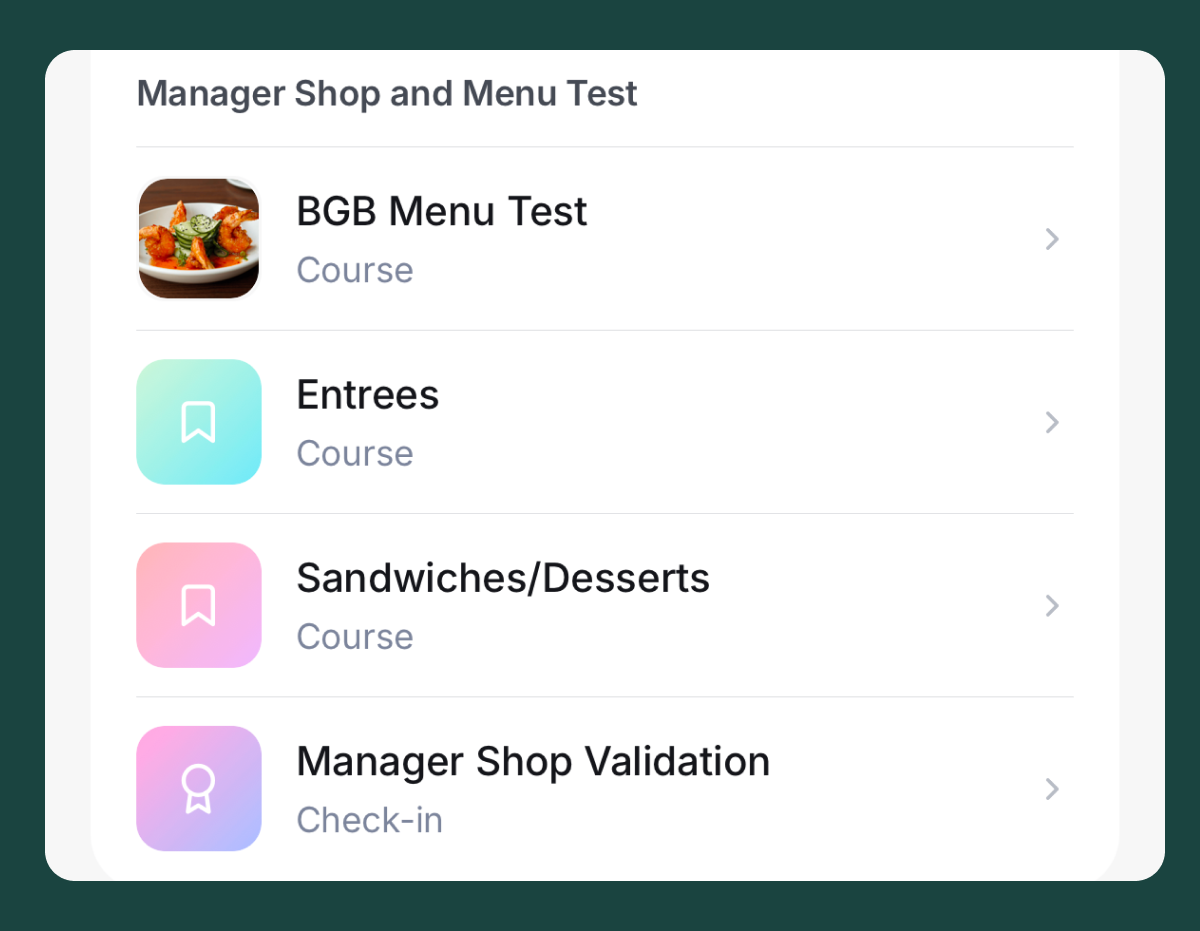
At the end of every server training, the management shop puts the trainee in a real scenario: waiting on their manager and a certified trainer or colleague, demonstrating steps of service, hospitality, and soft skills. The same sign-off process exists for hosts.
"Management disengagement is one of the biggest roadblocks to training. The delegate button exists to help managers, not to let them off the hook."
Opus check-ins are built to support exactly this dynamic. Managers can complete check-ins themselves or delegate to a specific trainer for a specific shift—keeping oversight in place without creating a bottleneck. The delegation feature is there to make management easier, not to take them out of the loop. Build that expectation in before training starts.
Training doesn't stop at sign-off, it’s ongoing
Once a server is certified, the program shifts to reinforcement. Burtons runs 30-, 60-, and 90-day check-ins with team members after the program ends—tracking whether the training is actually translating on the floor. High training labor, elevated turnover, or recurring guest issues can all signal a need to revisit the training team or the content itself.
Beyond structured check-ins, Ask Opus, in-app AI search, has become part of how team members stay sharp during service—particularly on allergens. Across Burtons Bar & Grill's locations, staff have submitted nearly 1,000 questions through Ask Opus, with roughly 70% focused on menu allergen and ingredient queries.
For a brand that takes allergen accuracy seriously, having that information accessible on the floor matters.
Plan your trainers the same way you plan your trainees
The session generated a strong side conversation about trainer readiness—and Jennifer's take was direct: being the best server doesn't make you the best trainer. What makes a good trainer is what Jennifer calls the "hospitality gene"—the instinct to read a guest, anticipate a need, and make someone feel genuinely welcome. It's what you're looking for in servers and trainers alike, and it's not something a course can create from scratch.
Burtons runs a certified trainer program, ensures trainers know their shift assignments in advance (so they're mentally prepared to train, not surprised at the start of a shift), and staffs training days with enough certified trainers that no one is overloaded.
"Planning and preparing your trainers is just as important—if not more—than planning and preparing your trainees." — Jennifer Quirk, Director of Training, Burtons Bar & Grill
Burtons also looks inward before looking outward. They actively recruit servers from the host stand and other roles—people who already know the brand, know the floor, and have grown up in the training system. When someone is promoted from within, they already know Opus. The training culture travels with them into their next role.
Bringing this to your operation
FOH service training is only as strong as the system—and the culture—behind it. A few things that work across operations, based on what Burtons has built:
- Start with a shared definition of great service. If it's not written down and repeatable, it won't train consistently.
- Map training to the guest experience, not the task list. Sequence matters—digital before live, one phase at a time.
- Keep videos short and tied to practice. 12 to 16 seconds per step is enough to set the standard. The floor is where it gets applied.
- Keep managers in it. The final sign-off should come from a manager who has been engaged throughout—not just showing up at the end.
- Make accountability part of the culture, not the discipline process. When training is a job expectation from day one, completion becomes a habit—not a battle.
Ready to build a service training program that drives consistency across every location? Let's talk →

.jpeg)