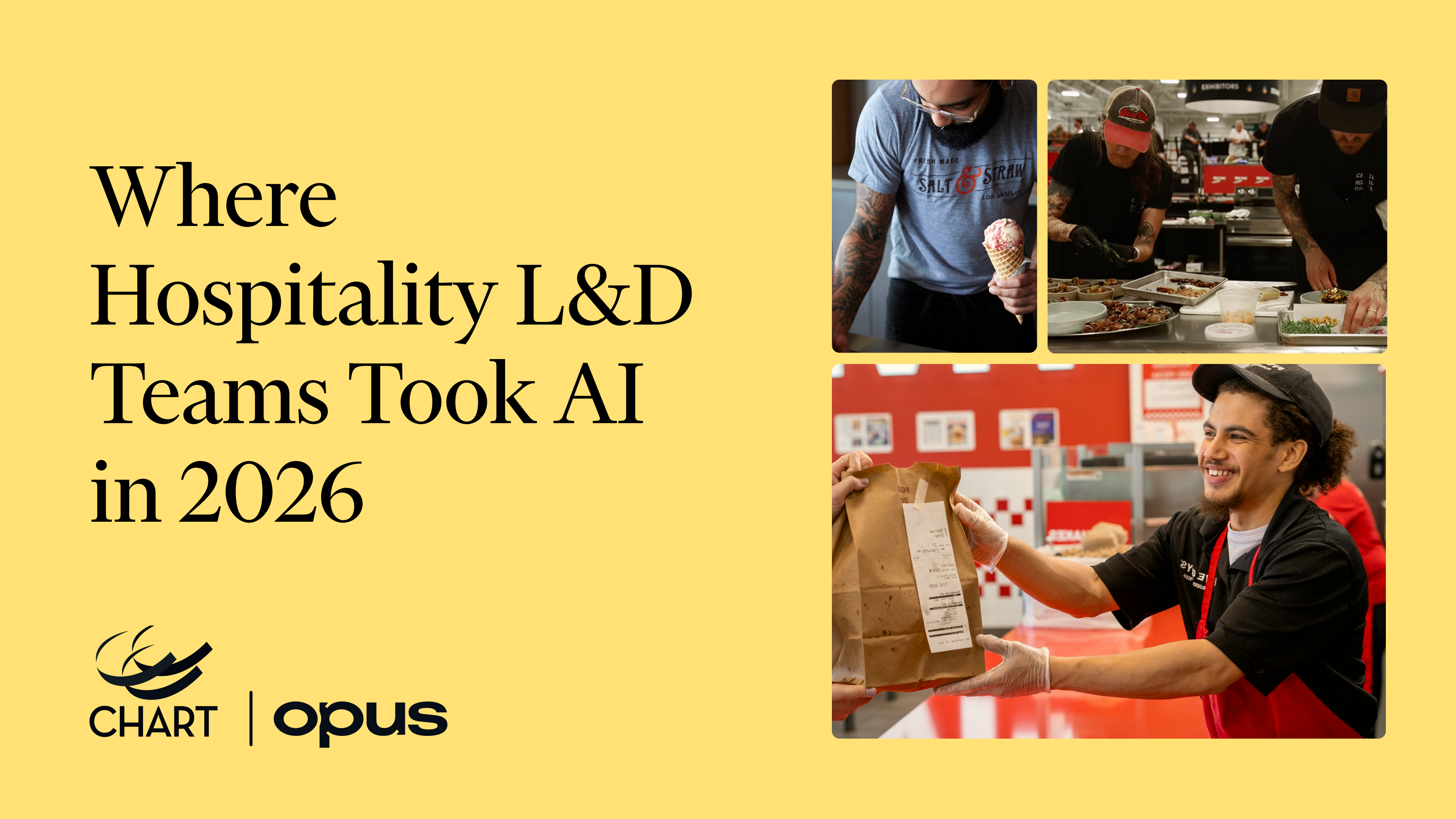
This piece is part of a series drawing on findings from the 2026 Hospitality Training 360 Report, produced by CHART and Opus. Download the full report here
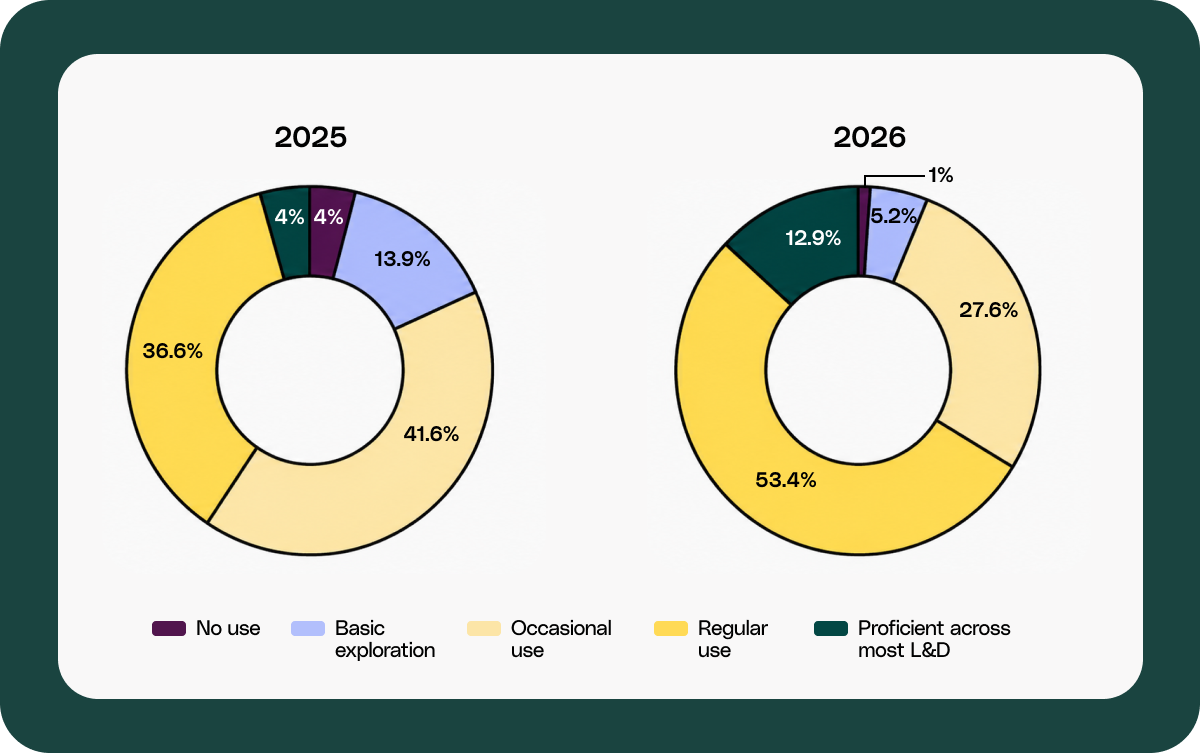
Each year, the Hospitality Training 360 Report asks L&D professionals how AI is shaping their work. In 2025, the answer was still largely exploratory — nearly half the field was still figuring out what the tools could do, only 8% considered themselves advanced users, and most who were using AI were using it for one thing: getting content out faster, primarily through ChatGPT.
The 2026 data tells a more developed story. Two-thirds of respondents now consider themselves regular or advanced users. The non-user population has dropped to 1%. The toolset has diversified well beyond a single platform. And the way teams describe their AI use has shifted from "we're experimenting" to "here's what we've built around it."
This piece takes stock of where hospitality L&D's AI adoption actually stands: which tools teams are using, what they're using them for, and what it looks like when a team moves past faster content production into something more deliberate.
Content development leads. Other use cases are catching up.
For most teams, AI started with content. It still lives there — 49% already use it for content development, with another 40% likely to follow within a year or two. The appeal is clear: content creation is time-consuming, repetitive in its mechanics, and improvable in ways that show up fast. Respondents described courses that used to take days now taking hours. One team noted they could now reach niche departments they previously couldn't staff training for at all.
But content development as a use case has a ceiling. It makes L&D faster. It doesn't necessarily make it better at answering the question executives care about: whether training is moving any of the numbers that matter to the business.
That's where the more significant movement in this year's data comes in. AI use in learning analytics grew 9 percentage points year over year. Strategy and planning grew 6. Both remain low in absolute terms — 18% and 21% of respondents are already using AI there — but the direction matters. Teams are beginning to use AI not just to produce outputs, but to think more clearly about what to build and whether it worked.
Training delivery, meanwhile, barely moved — from 15% to 17%. That gap between content development and delivery isn't a lag. It's a deliberate posture. The same year AI adoption grew 20 percentage points, hands-on training grew 11. Teams are using AI to reclaim time, then putting that time back on the floor. Both trends are running in parallel.

What teams are using and what they're using it for.
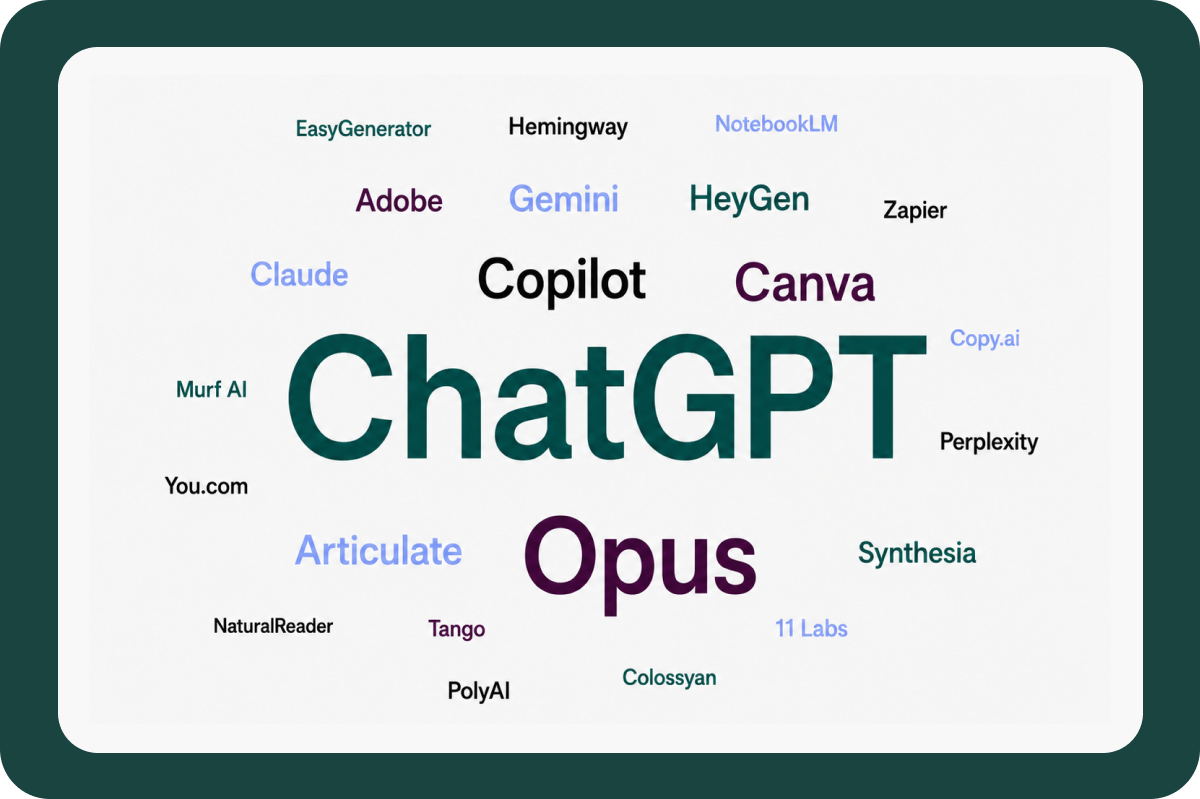
ChatGPT remains the starting point for most teams. It handles broad drafting work: content outlines, SOPs, communications, and brainstorming. But what's emerged in 2026 is a clearer logic about how it fits alongside other tools. The pattern that shows up repeatedly in respondent answers is a general model for the thinking, and a purpose-built tool for the execution.
"ChatGPT for organizing thoughts and pulling content, Opus AI for translating existing documents into microlearning."
For visual and video content, the stack has become more specific. Canva AI handles design and voiceovers. HeyGen generates full AI video when filming isn't an option. One respondent laid out their workflow: "ChatGPT and Perplexity for planning and analysis, Canva voiceover for video, HeyGen for full AI-generated videos when we can't shoot in-house" — a production capability that would have required a dedicated budget and external support not long ago.
The more telling signal is in research and strategy. Gemini, Claude, Perplexity, and NotebookLM are showing up alongside ChatGPT for data synthesis and planning work. One respondent described using AI as "a thinking partner across operations, finance, and training — helping managers quickly analyze data, draft SOPs, and prepare communications that used to take hours." Another uses customized ChatGPT workspaces specifically to "proofread, make improvement recommendations, and summarize analytics." The framing has shifted from tool to collaborator.
That shift — from content production to strategic support — is what separates the 2026 picture from 2025. The tools haven't changed that dramatically. What's changed is the ambition behind how teams deploy them.
What happened to the hours.
Cunningham Restaurant Group illustrates what it looks like when a team gets deliberate about this. CRG runs 47 locations across 18 different concepts with a training team of four — a ratio that leaves very little room for anything that doesn't directly move the program forward. Before AI, most of the team's time went into building content in the LMS. Necessary work, but it kept skilled people tethered to production.
They built four custom GPTs, each assigned to a specific content type: hourly training, manager content, restaurant messaging, and menu materials. A team member confirmed the approach in the survey:
"We have four custom GPTs that my team and I designed that we use alongside Opus to create training content more quickly."
The hours that came back didn't sit in a backlog. They went into restaurants — more live sessions, a monthly refresher calendar, annual recertification for trainers. The team got closer to the work that training is supposed to support.
That's the version of AI adoption worth paying attention to. Not faster production of the same outputs, but a reallocation of where skilled people spend their time. Most teams haven't reached that point yet, and it's worth being honest about why. Using AI for content development is a productivity gain. Knowing where the recovered time went is a strategic decision — one that requires someone to decide, before the hours arrive, what they're actually for.
The gap that's opening now.
The proficiency divide that defined 2025 has largely closed. What's forming now is a different kind of gap: between teams using AI to produce more and teams using it to work differently.
AI use in strategy and planning is growing because the underlying constraint hasn't changed. Time pressure remains the top limiting factor in 2026, ahead of budget. Producing content faster doesn't address a time problem. Making sharper decisions about what gets built — and building less of the wrong thing — does. AI can support that kind of thinking. But only when someone is directing it toward the right questions.
This post draws on data from the 2026 Hospitality Training 360 Report, produced by CHART and Opus. Download the full report here

.jpeg)