

Training Example: How Swingers Uses Assessments and Coaching to Drive Ongoing Consistency

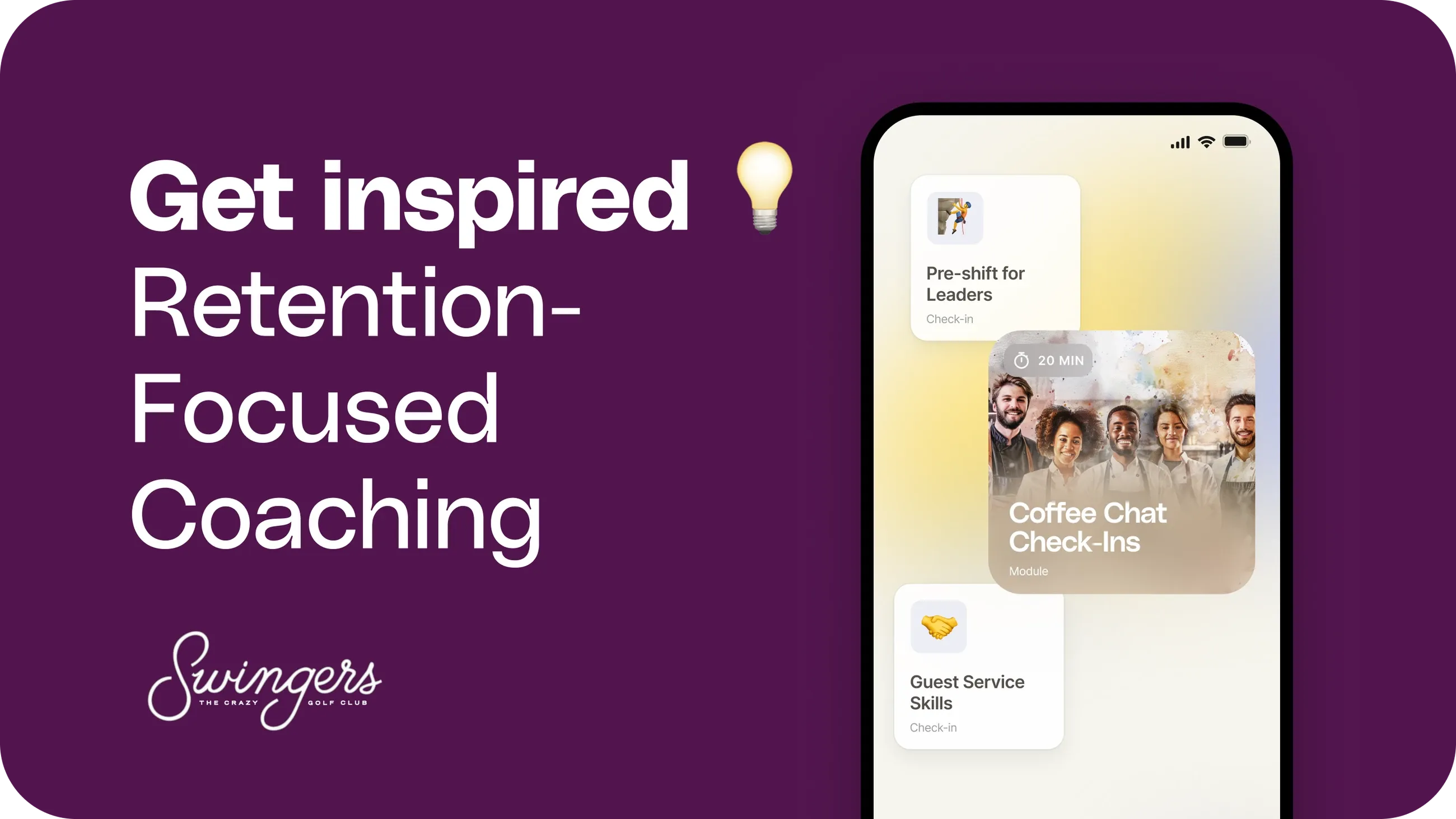
The Challenge: Moving beyond one-time testing to validate whether employees can consistently perform skills—while identifying who's at risk of leaving.
The Solution: Structured "Coffee Chat" assessments layered throughout an employee's journey that combine self-reflection, manager observation, and development planning.
The Result: Proactive retention planning that keeps high-performers engaged and gives leadership visibility into skill gaps and flight risks before they become problems.
Turning Casual Check-Ins Into a Strategic Advantage
When Ambryn Alam, VP of People & Culture at Swingers, inherited a paper-based "coffee chat" system from their UK operations, she saw an opportunity to transform check-ins into strategic skills validation.
The business case was clear. As Barby Rivers, Director of Operations, explained: "When you have highly skilled employees who've been with you longer, they're making 2x the tips per shift because we can staff fewer people. Those team members get higher wages, and we're more efficient operationally."
But keeping those high-performers requires knowing where they are developmentally—and catching retention risks early.
Want to learn more about ongoing skills validation? This approach was featured at our November 2025 Office Hours on Level 3 Assessments. Read about the full session.
What "Coffee Chat” Check-ins Actually Assess
Coffee chats aren't performance reviews or knowledge quizzes. They're Level 3 assessments: assessments that evaluate whether team members can actually apply skills on the job over time, not just pass a test once.
Each coffee chat combines:
- Self-assessment questions - Team members reflect on confidence, challenges, goals
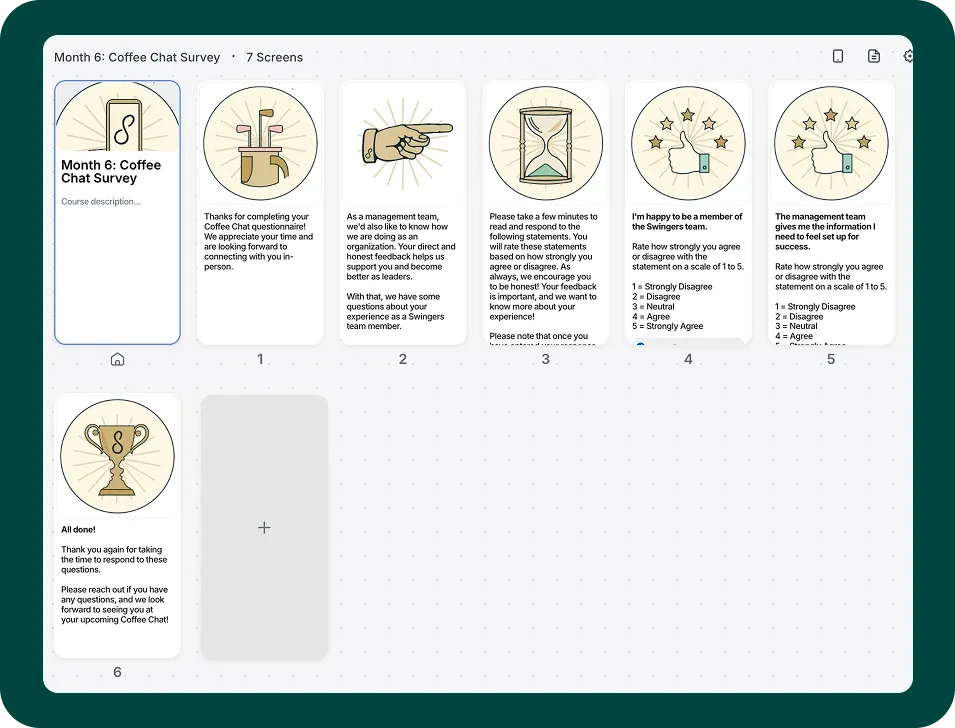
- Survey responses - Rating scales capture sentiment trends over time
- Manager observation - Structured conversation about real performance
- Development planning - Specific next steps based on current skill level
"It's really a series of guided conversations throughout their employment," Ambryn explained. "It never stops. It's continuous validation of where they're at."
The Assessment Timeline
Coffee chats happen at critical skill validation and retention risk moments:
- Week 1: Getting to Know You - Baseline expectations
- Month 1: Goal Setting - Early skill confidence check
- Month 3: Progress Check - Core competency validation
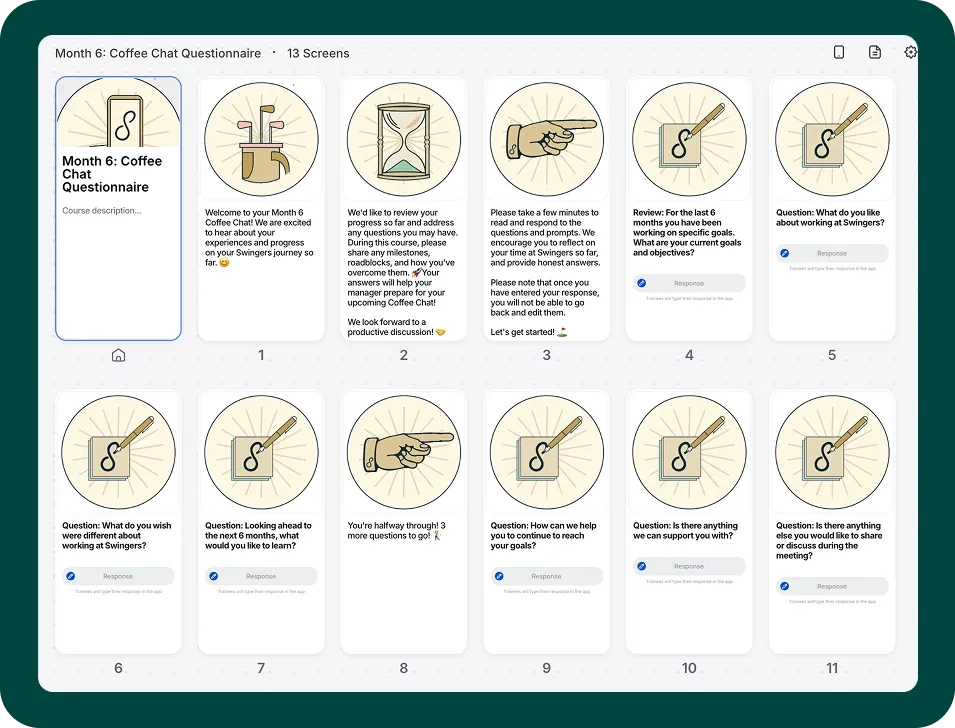
- Month 6: Development Discussion - Advanced skills assessment
- Month 9: Future Planning - Retention risk identification
- Midyear & Annual: Performance Reviews - Comprehensive validation
"We need to know where our team's at so we can plan appropriately," Ambryn said. "Are they happy here? Do they want to be here long-term? Are they on their way out? Is there something we can help correct before it becomes a problem?"
Why Skills Validation Drives Retention ROI
Barby was direct about the operational math: "We set the bar high, but we treat people really good. When you retain highly skilled employees, they're making 2x the tips per shift because we can staff fewer people. We're more efficient operationally, and labor costs are lower because we're not constantly training replacements."
The retention intelligence gathered through coffee chats gives leadership visibility to:
- Identify flight risks before they give notice
- Spot skill gaps before they impact service
- Understand development needs to create growth paths
- Track sentiment trends by location or manager
"Staffing is a huge conversation in hospitality," Ambryn noted. "We can be a best-in-class employer, but we need to know where our team's at to plan for what's coming."
Teaching Managers to Assess Skills With Transparency
One powerful aspect emerged almost by accident. When Ambryn discovered the assessments were visible to employees, she initially panicked. "I'm like, 'Oh god, now what do I do?'"
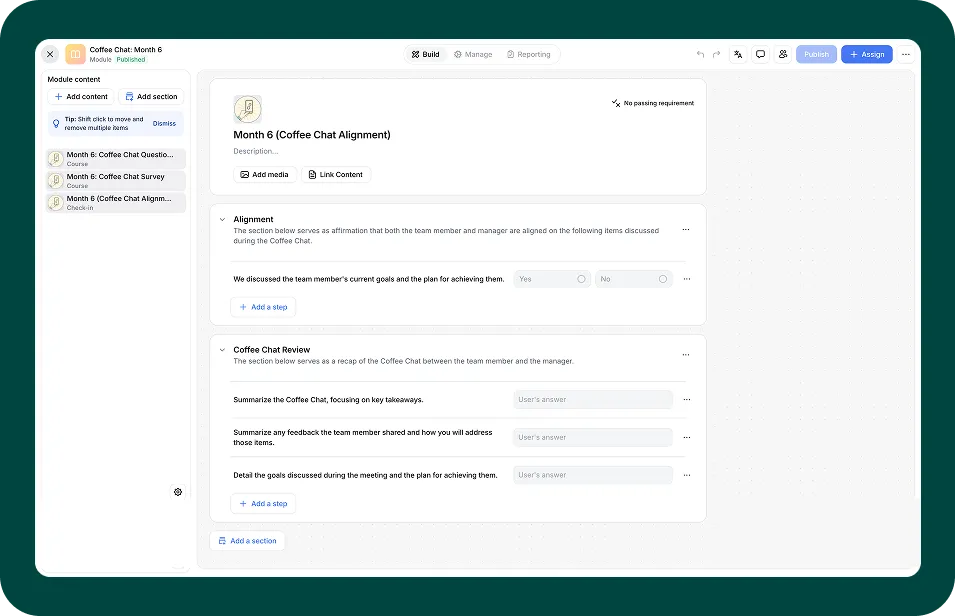
After discussing with Barby, the transparency strengthened assessment quality. If team members see what managers document about their skills, it forces honest, specific observations.
"The whole point is we're asking team members how they feel—do they feel supported? Do they have the information they need?" Ambryn explained. "Then we use those answers to facilitate the conversation. That should be transparent."
Barby emphasized the coaching element: "How managers communicate in those logs gives us insight into how their mind is working, how they're communicating information to the team."
The questions are structured to push managers toward specific skill validation, not yes/no answers.
What Level 3 Assessment Looks Like
Month 3: Progress Check - Core Competency Validation
- Self-assessment: Which skills feel solid? Where do you still hesitate?
- Manager observation: Can they handle busy shifts without supervision?
- Development plan: Advanced skills to build over next 60 days
- Retention signal: Do they see a path forward or just collecting a paycheck?
Month 6: Development Discussion - Advanced Skills
- Self-assessment: What do you want to get better at? What would make you stay long-term?
- Manager observation: Ready for increased responsibility? Could they train others?
- Development plan: Leadership skills or cross-training opportunities
- Retention signal: Clear career goals here or looking elsewhere?
Month 9: Future Planning - Retention Risk
- Self-assessment: Where do you see yourself in 6 months? What would need to change?
- Manager observation: Flight risk level, specific concerns
- Development plan: Internal promotion path or lateral development
- Retention signal: High/medium/low risk with action items
The Operational Intelligence It Creates
Aggregate data from coffee chats gives leadership visibility into:
- Skills distribution: Which venues have strong bench depth vs. crisis staffing risk?
- Manager effectiveness: Who's consistently developing high-performers vs. losing people?
- Training gaps: Do Month 3 check-ins reveal the same skill gaps? That signals a problem with initial training.
- Leading retention indicators: Sentiment scores dropping before someone gives notice? Intervene before they start job hunting.
"From an operational perspective, this hugely benefits us. This isn't just about being nice—it's about having the data to plan appropriately." - Ambryn Alam, VP of People & Culture
Real Talk: The Assessment Is Only As Good As Your Culture
Ambryn was direct about what makes this work: "Any company could copy-paste the work we've done—I'll give it to you. But it doesn't work if that's not your actual approach. What we've done is layered this into everything from how we recruit people, how we train them, all of our people practices."
The coffee chats work because they're supported by:
- Robust in-person training that builds the skills being assessed
- Manager coaching on developmental conversations
- Clear expectations about growth paths from day one
- Genuine culture of transparency and feedback
"Opus can't do everything for you. No learning platform can," Ambryn said. "But what it does give us is the structure to have meaningful conversations at scale—and the data to act on what we're learning before small issues become big problems."
Want to see how Swingers built their coffee chat structure in Opus? Scan the QR code to explore their assessment timeline and manager conversation guides.

Swingers is a UK-originated hospitality concept combining crazy golf, cocktails, and street food. VP of Learning & Culture Ambryn Amal and Director of Operations Barby Rivers shared their approach during Opus Office Hours in November 2025.

Explore more recent training examples
 August 9, 2026
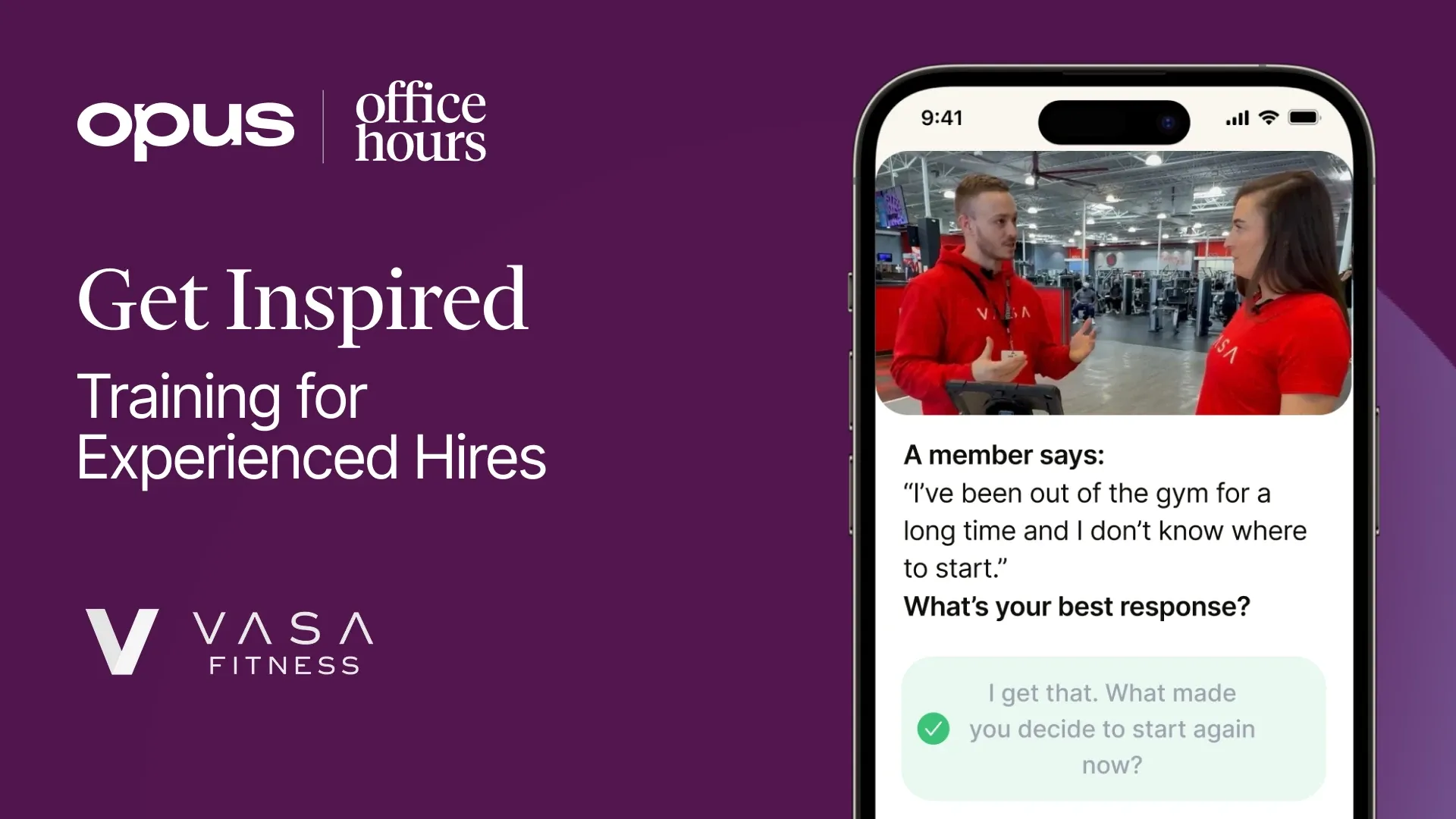
How VASA Fitness Trains Skilled Hires Who Already Know the Job
See how VASA Fitness trains experienced personal trainers by building on existing expertise through peer-led learning, gap-focused training, and real-world practice—driving stronger performance and retention.
Manager & Leadership Training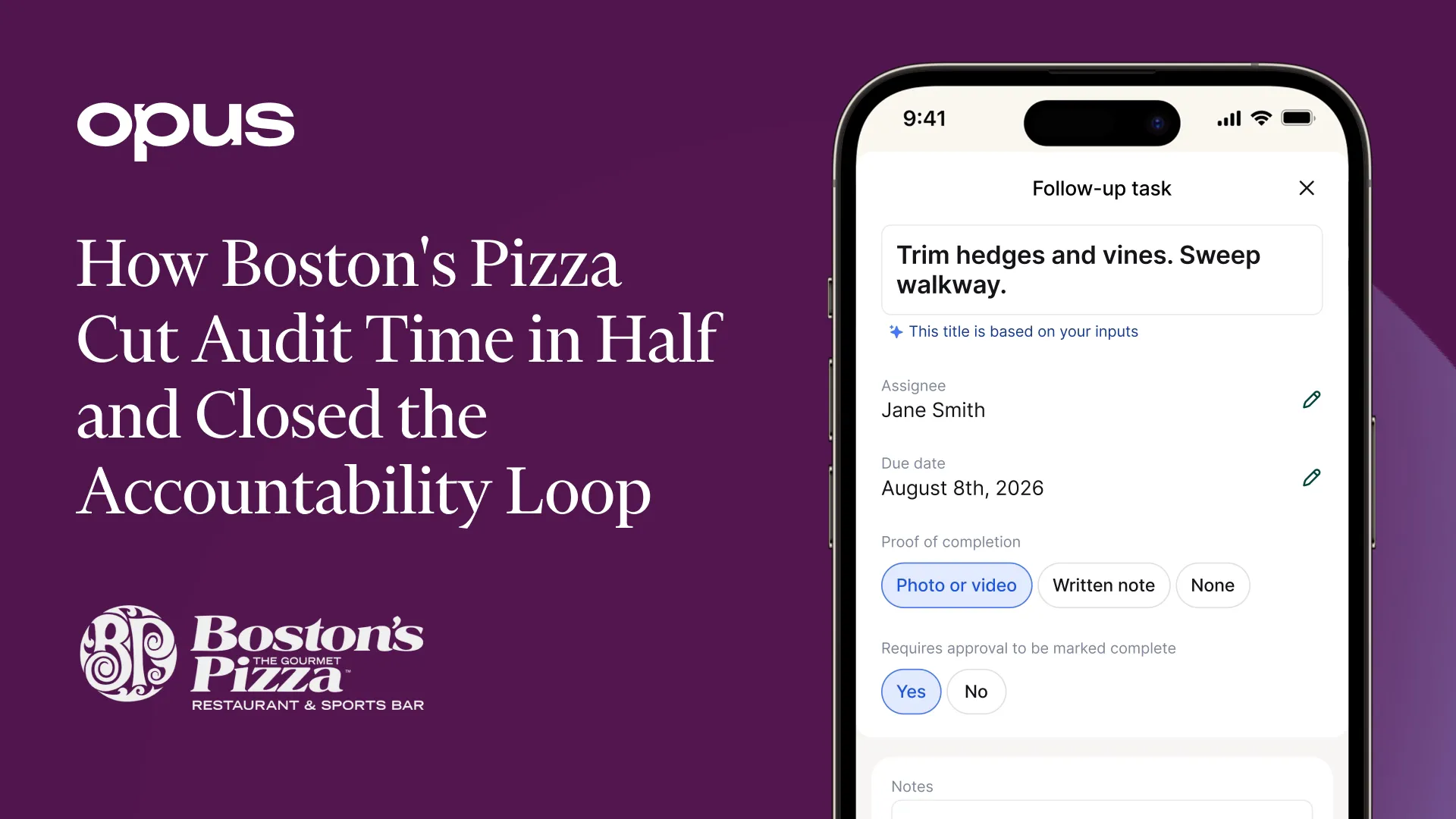 August 9, 2026
How Boston's Pizza Cut Audit Time in Half and Closed the Accountability Loop
A look at how Boston's Pizza moved from Excel spreadsheets to photo-backed, mobile audits, cutting audit time in half across its franchise network and building accountability into every finding.
Role-Based Training July 30, 2026
Program Rollout Communication Guide
This template is modeled on bartaco's successful Opus rollout. It uses the real messages, tags, and cadence they used, which we think is a best practice for launching any training initiative.
Manager & Leadership Training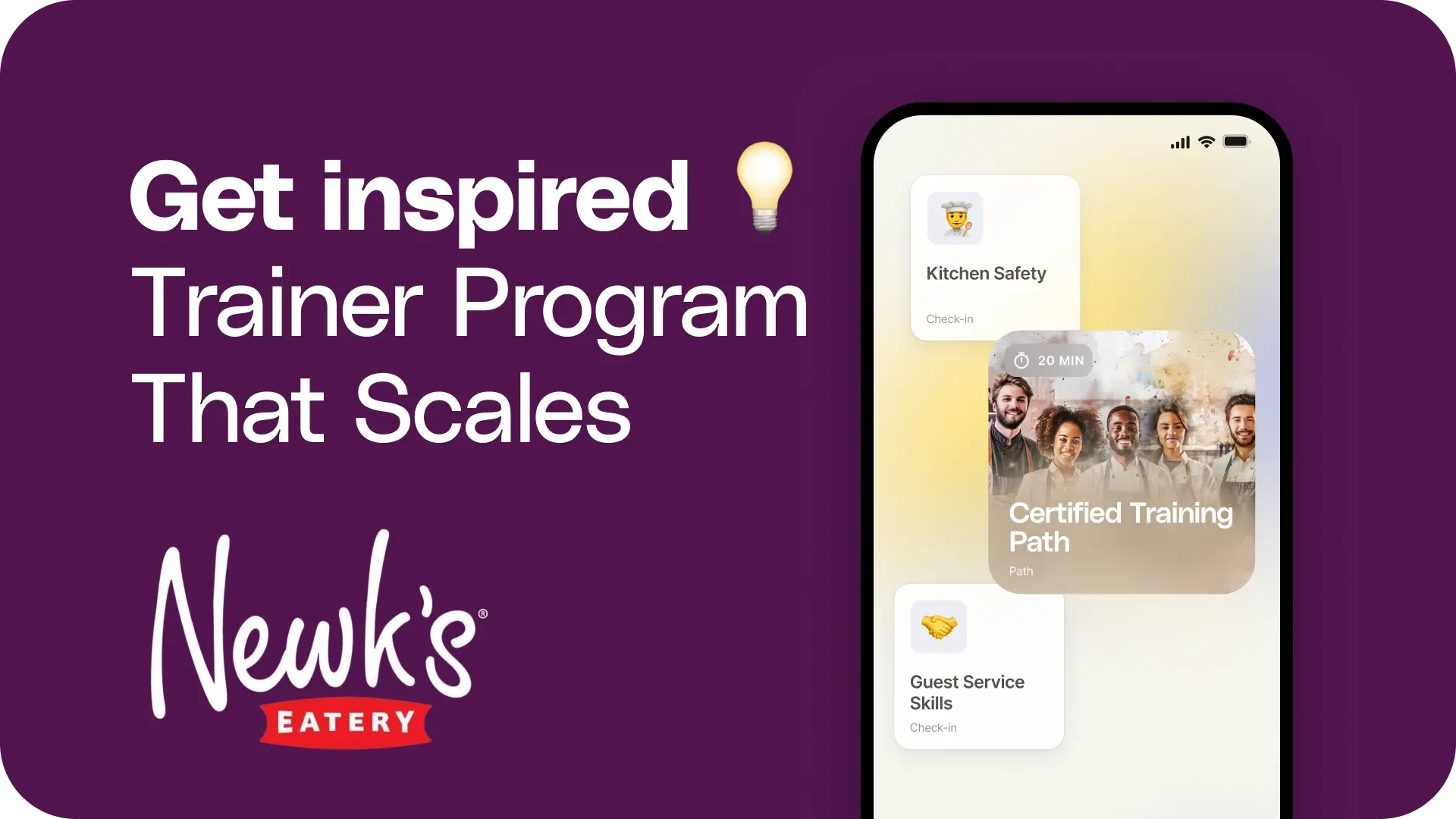 May 10, 2026
How Newk's Eatery Built a Train the Trainer Program That Scales
Newk's Eatery certifies 300+ trainers across every line position. See the exact training program on Opus: prerequisites, day-by-day courses, and the paper checklist that makes it work on the floor.
Manager & Leadership Training April 1, 2026
How Burtons Grill & Bar Runs FOH Server Training
Burtons Bar & Grill runs a structured, two-week FOH server training program that combines video-based standards, progressive on-floor practice, and active manager involvement to consistently build both technical knowledge and hospitality soft skills.
Role-Based Training March 13, 2026
How Just Salad Builds Consistent Back-of-House Teams
See how Just Salad certifies every culinary team member before they step foot in the kitchen and built a training culture that drives industry-leading BOH consistency across locations.
Role-Based Training December 3, 2025
How Swingers Tests Real Knowledge and Skills on Seasonal Menu Rollouts
See how a simple two-part check—one written, one live—helps managers spot what’s missing, coach in the moment, and make sure staff are ready before a seasonal menu launch.
LTO & Promotions November 12, 2025
How Rising Tide Car Wash Trains Every Sales Associate to Win the Membership Upsell
See how Rising Tide Car Wash built sales training for team members with no prior sales experience, growing membership conversions from 5% to 18% in one year.
LTO & Promotions August 21, 2025
How Beyond Juicery & Eatery Gives Franchisees Training Control with QR Codes
See how Nostimo Brands use QR codes to build flexibility into consistent role-based training path.
New Hire Onboarding July 24, 2025
How Starbird Drives Consistency with One Simple Resource
See how Starbird Chicken solved sauce consistency issues across 40+ locations by creating a simple visual job aid that uses real product photos to guide correct bottle and shaker usage, improving food quality, training, and operational efficiency.
Menu & Product Knowledge April 7, 2025
How Genghis Grill Streamlined Opening Procedures with a Digital Manager Checklist
See how Genghis Grill uses Opus to streamline daily operations with a digital GM Opening Checklist. Track tasks, upload photos, and improve consistency across locations.
Compliance & Safety February 27, 2025
How Bricktown Brewery Makes Digestible Manager Training in Opus
See how Bricktown Brewery's Manager-in-Training module uses slow-drip learning over 36 days to achieve 9% retention improvement.
Manager & Leadership Training January 28, 2025
How Smashburger Refreshes Menu Knowledge in 3 Minutes
See how Smashburger uses short refresher modules and skill check-ins to maintain product quality and reduce retraining. Mobile-first, automatic, and built for results.
Refresher Training December 18, 2024
How Clutch Coffee Keeps Team Member Training on Track
See how Clutch Coffee's Trainer Tracker uses check-ins to manage training during rapid expansion from 10 to 20 locations in 2024.
New Store Opening November 19, 2024
How Bahama Buck's Builds Consistent Role-Based Training
See how Bahama Buck's created role-based training that fuses new hire orientation with level-based progression, reducing ramp time by 25%.
Role-Based Training November 19, 2024
How Big Chicken Reduced NRO Training Time by 30% with Opus
A four-day learning format from Big Chicken that reduced NRO training time from 10 days to 7 days.
New Store Opening November 19, 2024
How Newk's Eatery Sets Up New Hires for Success
See how Newk's used structured onboarding modules to reduce early turnover, ensuring consistent first impressions across all locations.
New Hire Onboarding November 19, 2024
How &pizza Builds Future Leaders with Manager-in-Training Lessons
Learn how &pizza reduced manager ramp time by 2 weeks using mobile leadership training in Opus. See how short lessons and career paths keep teams motivated and ready to lead.
Manager & Leadership Training November 19, 2024
How this Five Guys Franchise Uses Customer Service Certification to Elevate the Guest Experience
See how Life’s Food LLC uses Opus to certify customer service excellence across 25 Five Guys locations. Real-world audits, mobile training, and leadership accountability built in.
Manager & Leadership Training August 5, 2024
How taïm Trains Team Members on SOPs with a Falafel-Focused Course
See how taïm Mediterranean Kitchen trains staff on SOPs with engaging falafel prep videos and in-person skill Check-ins. Structured, visual, and built for consistency.
Menu & Product Knowledge August 4, 2024
How Zalat Pizza Sets New Hires Up for Success with Day-One Training
See how Zalat Pizza structures onboarding with daily training modules, branded visuals, and real-time Check-ins to ensure every new hire starts strong and stays aligned.
Role-Based Training August 3, 2024
How BelAir Cantina Trains on New Menus with a Personal Touch
See how BelAir Cantina uses video, Check-ins, and mobile learning to keep FOH and BOH teams aligned on seasonal menus, LTOs, and weekly programming.
Menu & Product Knowledge August 2, 2024
How Salt & Straw Launches Seasonal Menu Items with Limited Time Offering Training
See how Salt & Straw uses mobile training to launch new flavors with speed and consistency. Branded visuals, storytelling, and tastings help staff master every Limited Time Offering.
LTO & Promotions August 1, 2024
How Swingers Crazy Golf Trains Teams on Seasonal Marketing Promotions
See how Swingers Crazy Golf trains teams on co-branded promotions with storytelling, product knowledge, and dual assessments. Mobile, fast, and guest-focused.
LTO & Promotions June 10, 2024
How Hopdoddy Turns Internal Newsletters Into Actionable Training
Learn how Hopdoddy transformed internal emails into mobile-first training modules to improve communication, boost morale, and track engagement across teams.
LTO & Promotions June 10, 2024
How The Feinstein Group Tackles Role-Based Training
See how The Feinstein Group uses role-based training to ensure consistent host standards across three restaurant concepts in Tampa Bay.
Role-Based Training June 4, 2024
How Levity Live Prepares Future Managers with Multi-Week FOH Training
See how Levity Live supports internal promotions with a structured FOH training module in Opus. Mobile, media-rich, and built for shift-based learning over time.
Manager & Leadership Training June 3, 2024
How PLANTA Trains Teams on Exceptional Guest Service
See how PLANTA uses blended learning and personalized mobile modules to train staff on soft skills and hospitality standards—keeping service consistent and brand-aligned.
Role-Based Training