.png)
How Bonchon powers training and ops services across a multilingual workforce
When training and operations live in one platform, every restaurant delivers on the same brand promise. Bonchon used Opus to earn franchisee trust across 150+ restaurants in 7 languages, with double-digit customer traffic and sales growth in the year that followed.
ABOUT BONCHON
Bonchon is a Korean fried chicken franchisor scaling from 150 restaurants toward 500, most run by independent owner-operators. With one in five team members training in a non-English language, every restaurant needed to execute the same way, regardless of what language their team trained in. Opus brought training and operations into one platform that every owner and every team member could use in their own language. As a result, franchisees embraced the new system, and store performance soon followed.
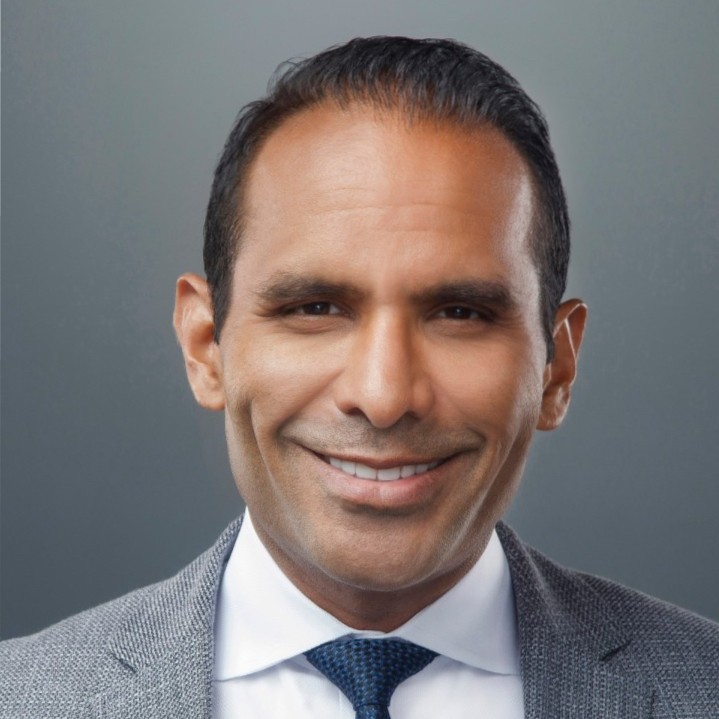
{{CEO-Bonchon}}
THE CHALLENGE
Before Opus, Bonchon's training lived across paper in some stores and a legacy LMS in others. That LMS served as a document repository for recipes, service standards, and newsletters, but it gave L&D no signal into whether any of it impacted performance in stores.
Each restaurant also ran on a single, shared login, so Bonchon's L&D team could see that a store logged in, but not who logged in or what they did once they got there. With roughly 30 new restaurants opening every year, that visibility gap only compounded.
"The information went out one way. It wasn't engaging, and it wasn't actionable. The problem wasn't the content. It was how we got people to actually use it in their work."
— Ashley Helkenn, Sr. Director of L&D and Ops Services, Bonchon
THE SOLUTION
Translation got the standard to every team member in their language
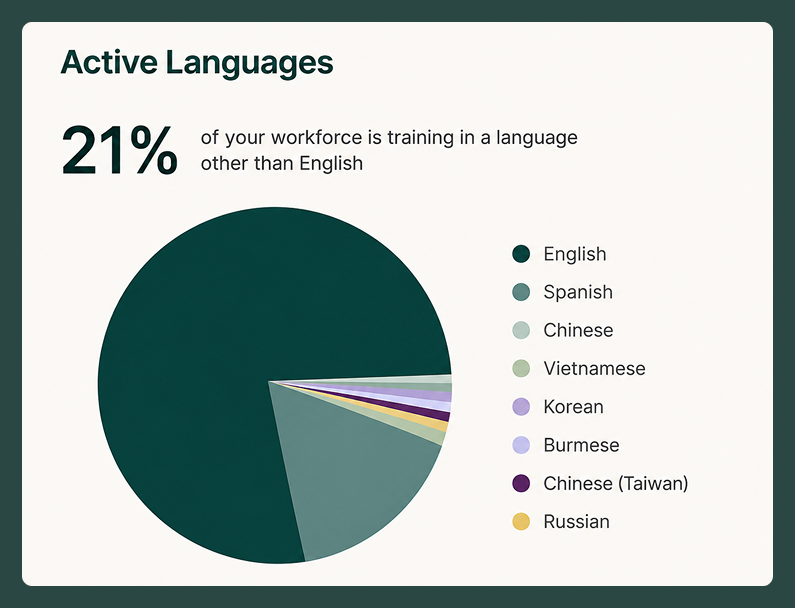
With Opus, tasks, training, resources, search, and messaging auto-translate into the seven languages spoken across Bonchon's workforce. Text-to-speech is built in for anyone who'd rather listen than read, and updates go out simultaneously, so L&D no longer runs a separate translation cycle for each language. For a team where 21% train outside English, providing language options not only creates an optimal learning environment, it shows Bonchon cared.
Connecting training to operations embedded standards into routine
Operators, not corporate, own execution at the store level. Keeping training and operational tools such as task management, searchable resources, and messaging in one place let them act on the standard immediately, in whatever way fit their store, without waiting on a separate system to tell them what to do.
That choice stays with the person running the store. A manager running a tight morning shift might use a task list, while another leans on Ask Opus to answer questions mid-shift instead. Either way, accountability for holding the standard rests with whoever's on the floor.
L&D knows the impact it’s having at every store
Opus gives Bonchon's L&D team and franchise owners visibility at the individual level: who's training, who's running line checks, and who's engaging with resources. Instead of chasing confirmation that a course got completed, L&D can see directly whether the work itself got done, like a line check run on schedule. They can also see which questions come through Ask Opus and which resources a team member actually used, giving L&D more context on how to support store teams.
"I'm not overly concerned with training completion rates. They give an incomplete picture and skew toward box-checking when they're the only measure of success. I care about impact, whether the training we built actually changed what happened in the store. Opus gives our operating teams a variety of tools, and they can engage with the ones that work for them. It also lets us see what they use and how it's working, so we can add resources when a location needs more support or when the impact isn't where it should be."
How earning trust came before pushing programs
Bonchon rolled Opus out over a year in three phases, focusing on getting franchisee buy-in first.
Earn trust first
Bonchon centralized key resources in Opus and let operators come to them voluntarily. They watched for lever moves: operators returning unprompted, owners adding their own team members, people finding answers themselves. The engagement signals came well before Bonchon rolled out a single required program.
"We measure trust through lever moves, not a single number. An increase in voluntary engagement tells us people trust that this is now the source of truth. When stores start adding their own new team members without being asked, that tells us the same thing — they've decided there's real value here.”
Push the high-priority programs like promotions
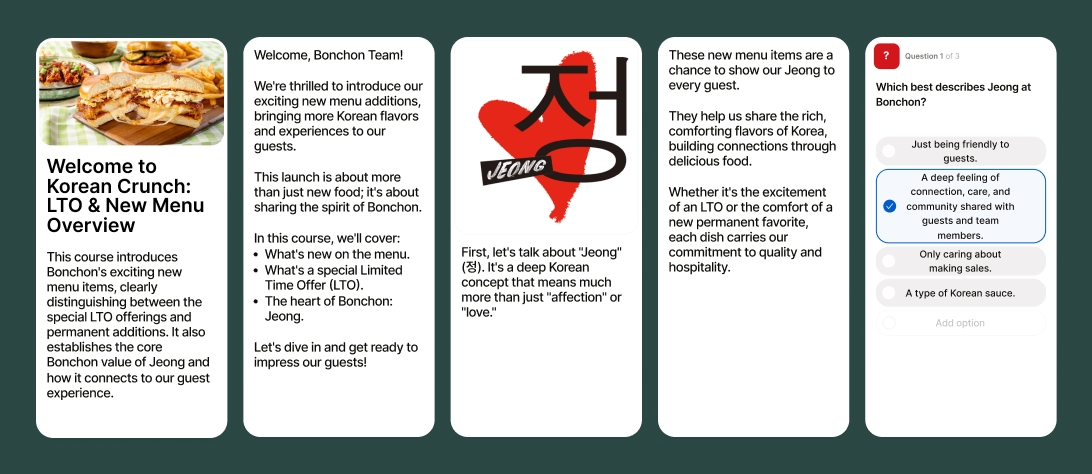
Once trust was in place, Bonchon used Opus for the launches that mattered most. The Korean Comfort Limited Time Offer (LTO) was built in 3–4 hours, the fastest training creation Bonchon had seen, using one course adapted for front- and back-of-house instead of separate materials for each.
Speed at corporate translated into engagement at the store: Bonchon's usage dashboard shows spikes that line up with LTO launches, and the fastest builds have produced the fastest adoption at the store level.
Build it into every new restaurant
New store teams work in Opus from Day 1. Bonchon University, the brand's franchisee onboarding curriculum, delivers pre-arrival training for franchise owners, while New Restaurant Openings (NRO) task lists begin during setup and friends-and-family service, so teams are already working in Opus before the first guest walks in.
THE RESULTS
After one year with Opus, Bonchon could finally see whether training was actually changing what happened on the floor. Food execution had been the team's focus that year, and as food scores rose, traffic and sales rose with them.
- Food scores increased by 22%
- Double-digit traffic and sales growth YoY
- Quality-assessment improvements track directly to Opus usage
"When we visit stores we run a quality assessment, and the improvements we see are directly related to their usage of Opus. When the information gets used, the training happens, and the stores perform better."
— Suzie Tsai, CEO, Bonchon
💡 Spotlight: Cleanliness to revenue
Bonchon's guest feedback through Tattle shows cleanliness is the #2 driver of dine-in traffic, behind only food quality. In Opus, the highest-cleanliness stores are the ones running line checks most. Guest feedback, in-store behavior, and revenue all live in one place.
LOOKING AHEAD
Bonchon University could grow into a full-lifecycle program for new partners, starting with bringing prospective franchisees through Opus before they sign. That would give Bonchon an early read on partner fit, and it expands the role Opus plays in the franchisee relationship, from the very first conversation.
"It really starts with Opus. When we bring potential franchisees in to grow new units, the first place we ask them to go is Opus."
— Suzie Tsai, CEO, Bonchon
#list-box-start#
About Bonchon
Bonchon is a Korean fried chicken franchise known for its signature double-fried wings and hand-brushed sauces. The brand operates 150+ restaurants in the US and is on the path to 500. Learn more at bonchon.com.
About Opus
Opus Training is the training operations platform for franchise businesses, combining training, tasks, and communications in one mobile-first toolkit. Opus serves hundreds of leading restaurant brands including Craveworthy Brands, Blaze Pizza, Smashburger, and Bonchon. Learn more at opus.so.
#list-box-end#
.jpg)
.png)





.jpeg)


.png)