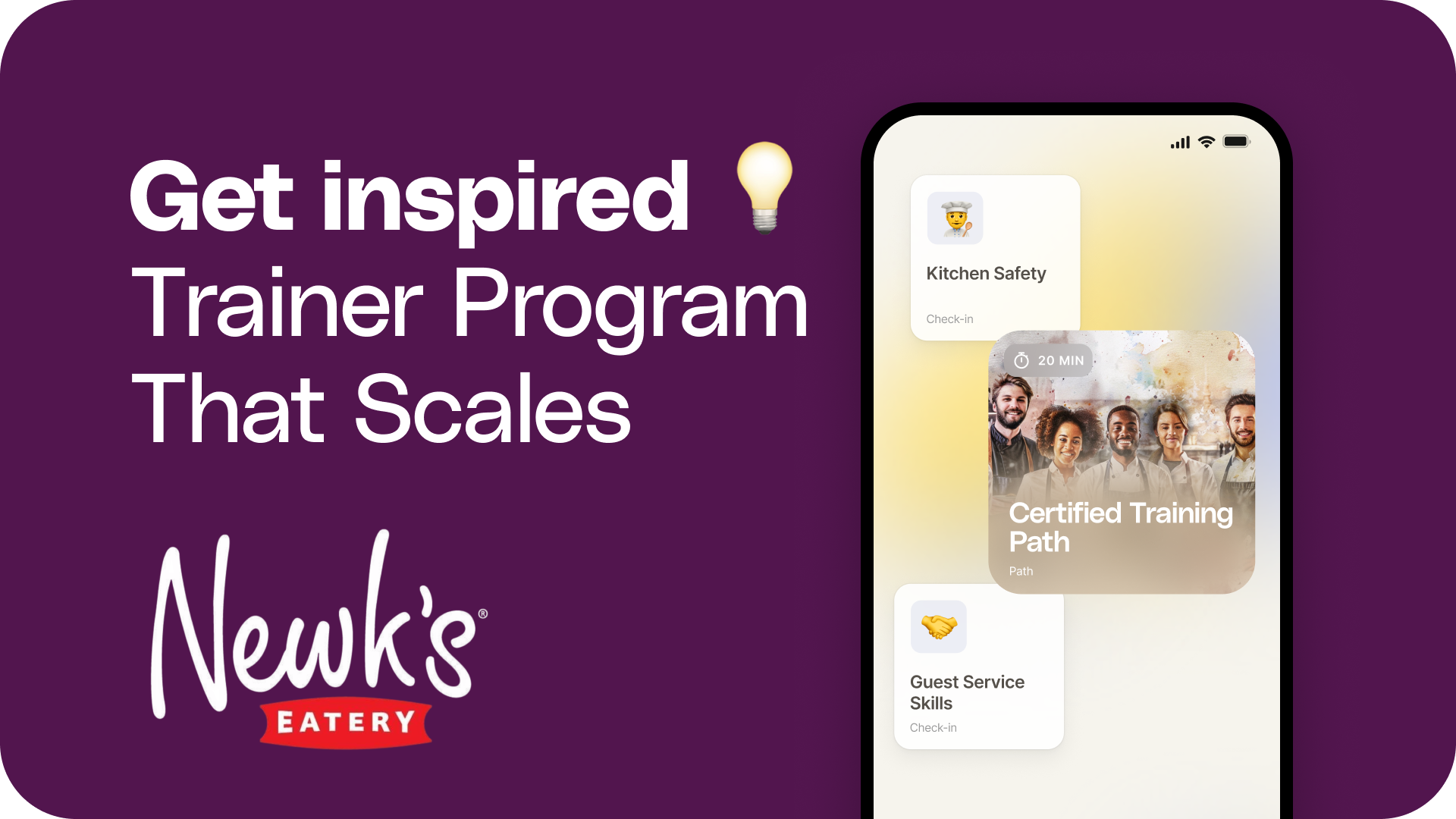
Most frontline training isn't really a program. It's whoever happens to be on shift showing the new hire the ropes. Newk's Eatery decided to change that, building a certified trainer system that now runs 300+ trainers across the brand, one for every position from back-of-house to front.
Here's how they built it, and what makes it hold.
Why Certified Trainers Matter
The standard fix for a training gap is to put it on the manager. But managers don't have the bandwidth to consistently onboard every new hire, at every station, every time. The result is the "warm body" problem: someone gets handed an apron and learns by osmosis, inconsistently, from whoever is available.
At Newk's, certified trainers solve that directly. They take the training load off management, ensure every new hire gets the same onboarding experience, and build community from day one. A great trainer doesn't just show someone how to build a salad. They help a new hire feel like they belong, which is often the difference between someone coming back for their second week or not.
Hire for It Before You Train for It
Jessica's Train the Trainer program starts before anyone touches the line: at the hiring stage.
For a deeper look at the cost of getting this wrong, and how Newk's approaches hiring at scale, read the full Office Hours recap →
At Newk’s, what makes a great trainer hire isn't who's loudest or fastest on the line. Jessica screens for what she calls a “forward lean.” Enthusiasm, warmth, patience, memory for procedure, coachability.
"You can teach someone to make a sandwich. You can't teach someone to care."
That standard applies to the interview itself. Jessica won't interview a candidate who shows up in flip flops. Whatever your equivalent signal of misalignment to the standard is – hold it. The people who are serious will respect it.
How the Newk’s Certification Program Is Built
At Newk’s, trainer candidates are required to have 100% completion rate on their own station-based training in Opus. Each module includes short videos showing the correct build alongside common mistakes, and quiz questions that validate knowledge before anyone goes hands-on. Because every team member is trained in this way, Newk’s feels confident that leveraging Opus data to identify trainer candidates.
The coaching module: What separates trainer certification from standard onboarding is the addition of a module on how to observe and give feedback — not just how to demonstrate the task. Trainers learn to explain what they're doing while they're doing it, and to notice when someone is struggling before it becomes a problem
The in-person component: Trainers are provided material to help guide them in instructing new trainees. These guides are paper based, but available digitally in the Opus resource library for references. Shoulder to shoulder training is Newk’s’ primary method of training.
Validation: Before a trainer is officially certified, they're observed during their first 14–30 days working with new hires. Heavy observation by a manager or certified trainer in the beginning, lighter over time as they prove out the standard.
See it in Action
The trainer certification pathway in Opus is separate from standard onboarding. Before a team member can enter the certified trainer track, they must already be certified on at least one station: Salad, Sandwich, Pizza, Prep, or FOH.
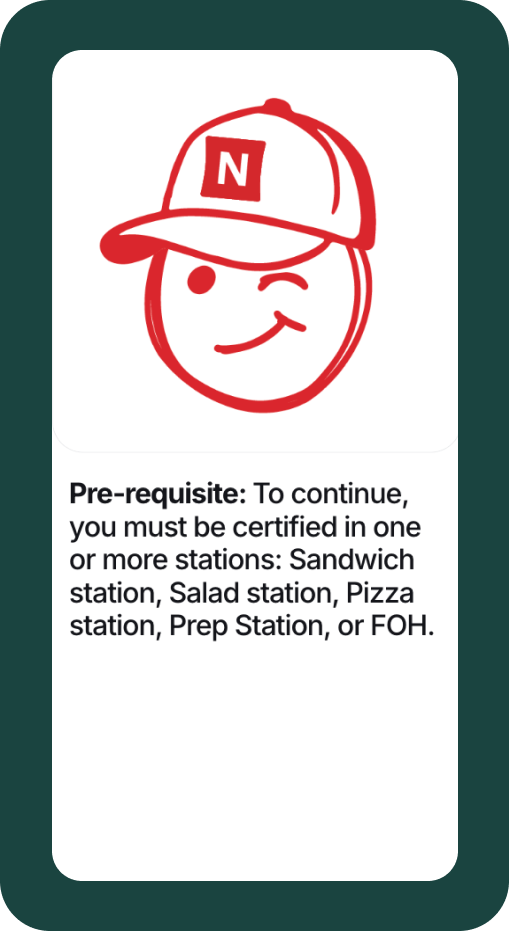
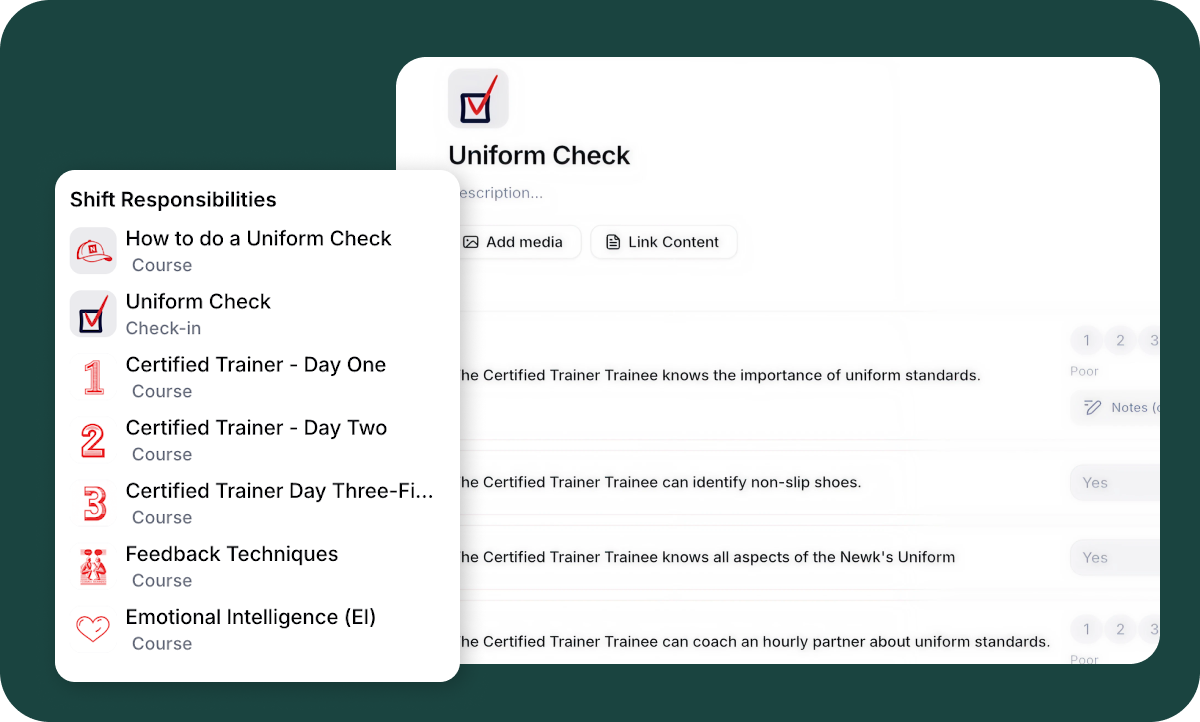
Once they're ready to go, the certification path covers the full scope of what it means to train someone, not just execute the task themselves. The curriculum runs across five day-by-day courses, including dedicated modules on Feedback Techniques and Emotional Intelligence. Shift responsibilities, including a Uniform Check course and skill validation are built into the sequence as well. This is where the already certified trainer assesses how well the soon to be trainer can perform a uniform check. For Newk's, uniform standard is their bar, so it's the one thing they really make sure they get right.
The in-person component runs alongside the digital coursework. On Day 1, the trainee shadows the trainer through the full station — watching videos together, touring the station, learning how to train on ingredient storage, setup, and production. At the end of the shift, trainer and manager debrief and rate the trainee across six dimensions: speed, attitude, safety and sanitation, restocks, works clean, and product knowledge.
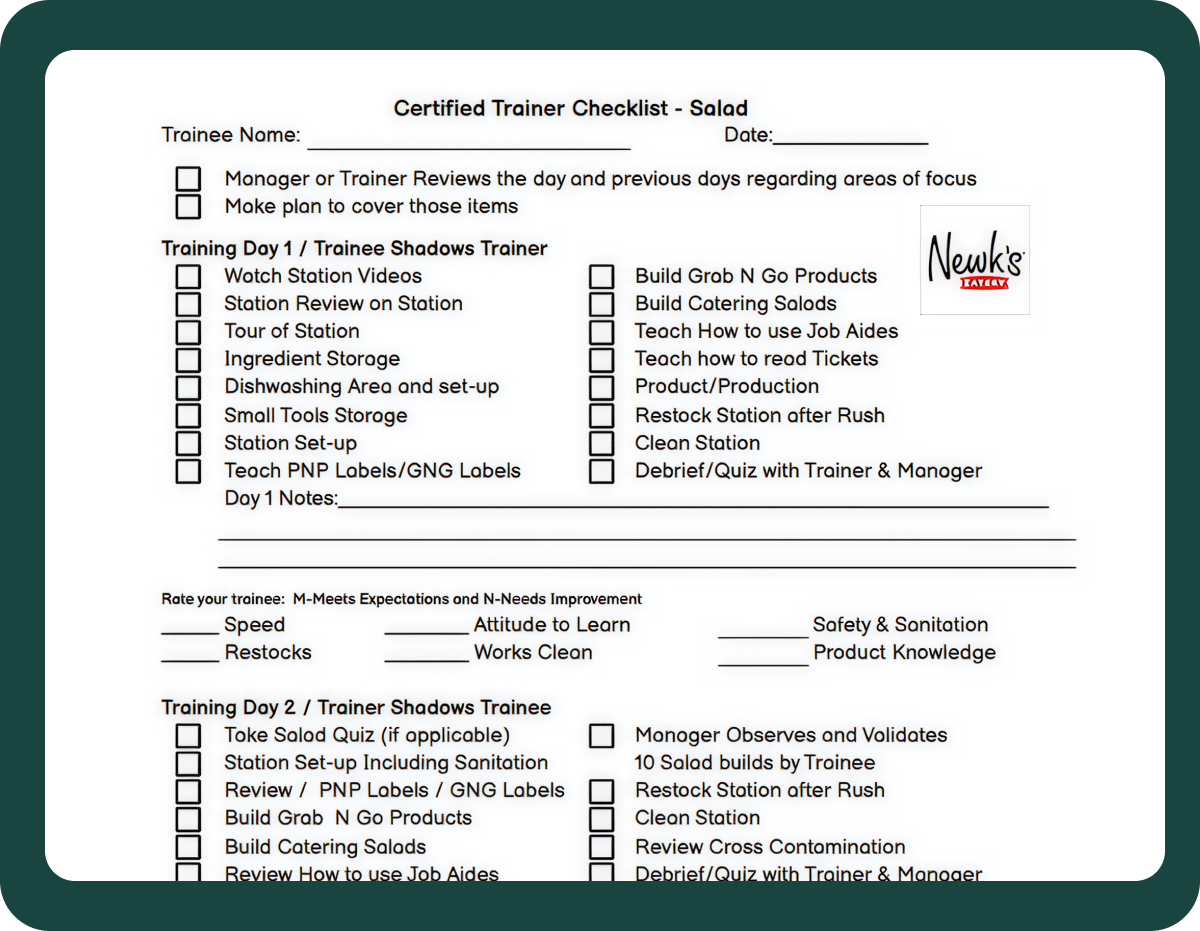
The checklist lives on paper for a reason. It's in the trainer's hands during the shift, not on a screen they have to step away to check. Practical, portable, built for the line.
"Knowing where to start is the hardest part. Once you have something that works, everything else has something to build on."
— Jessica Drahem, Director of Learning Development and Culture at Newk’s Eatery
From Certified Trainer to Career Path
The real payoff of a Train the Trainer program isn't just consistent onboarding. It's what happens over time — and how you make the role worth stepping into.
At Newk's, certified trainers are recognized, compensated, and developed in ways that make the investment visible from day one.
✅ Recognition: The certified trainer pin goes on the hat. It's a small thing that signals membership in something not everyone earns, and the rest of the team notices.
✅ Compensation: Certified trainers earn $2–$4 more per hour when actively training. Shifts are pre-scheduled so there are no surprises, and the goal is one consistent trainer for the full onboarding period. Continuity builds community.
✅ Career development: Earning a trainer certification isn't a lateral move — it's the first step on a visible path. Shift lead, associate manager, and beyond. Newk's builds their bench deliberately, and the team members who invest in training others are the ones who move up. That visibility changes who raises their hand for the role.
A Train the Trainer program, done right, isn't just a staffing solution. It's how you build a leadership pipeline from the back of the house up.
See It in Action
To see how Day 1 of the Newk’s Train the Trainer Program works in Opus, scan the QR code below.

For more from Jessica on the practices behind this program, read the full Office Hours recap →
Explore more training examples here →
Ready to build your own training program that scales? Let's talk →

.jpeg)