Some of your best hires already know how to do the job before their first shift. For fitness, that's often a certified personal trainer, but the same pattern shows up across other industries too: a chef who's run a line for years, a nurse switching over from another health system. Training an expert is a different problem than training a beginner, and it's easy to get wrong. Run a skilled hire through a beginner's onboarding and you waste the experience they bring, and tell them it doesn't count.
At VASA Fitness, every personal trainer comes in certified with at least a year of floor experience. Rather than retrain them, Shannon Jimenez, VASA's Senior Director of Learning and Development, builds on what they already know: she meets them on common ground, skips what a certification already covers, and designs the rest around three moves that only work on people who already have a craft.
VASA’s results speak for themselves. Since launching its new PT app and onboarding curriculum, VASA has seen a 25% increase YOY in PT sales, and COO Chris Griebe has reported a 50% increase in team member retention since VASA brought on Opus.
What makes a skilled role different to train
A personal trainer walking in the door already has a certification and years of experience. Re-teaching what they've already mastered wastes their time and your credibility. So VASA starts in two deliberate places.
Start with common ground. Jimenez designs onboarding to start where new hires' goals already overlap with VASA's. Common ground earns buy-in, because people adopt a new approach faster when it connects to something they already care about.
Most VASA trainers got certified because they want to change people's lives, which is exactly VASA’s mission. Because of this shared motivation, Jimenez can present the VASA way as the next step in work they already believe in, not a new set of rules handed down.
"We already know they have a skill set, and we're not trying to ignore what they bring. We meet them on common ground. They come in with habits, assumptions, and shortcuts."
— Shannon Jimenez, Senior Director of L&D, VASA Fitness
Skip the baseline. VASA's onboarding has no anatomy, no fundamentals of exercise science — an external certification already covers that. Training time instead goes to what a certification can't teach: business acumen, running a member consultation, and the standards that make a trainer successful at VASA specifically.
💡 For more from Shannon on the practices behind this program, read the full Office Hours recap.
Inside VASA’s Personal Trainer onboarding
VASA's personal trainer onboarding takes approximately six hours to complete over roughly two weeks. Opus is where the program begins and ends, but much of the learning also happens off the screen, in skill practice with personal training leads and peer-to-peer work on the floor.
Three design principles do the real work, each a deliberate answer to training someone who already knows their craft.
1. Earn the right to teach via peers
An expert changes how they work only when the instruction comes from someone they respect, not because you tell them to. The first job, then, is to earn credibility: training that comes from a peer who's done the job, not a corporate voice the room can dismiss.
Video is the backbone of VASA's personal trainer onboarding. Skills are taught through short clips of real VASA trainers demonstrating them, so a new hire learns by watching a successful peer instead of reading a standard. Seeing someone like them do the job well is what makes the instruction credible.
"I have zero street cred when it comes to telling people how to do their jobs. But if I record a peer who's successful, the team hears it directly from that peer, and that creates credibility." — Shannon Jimenez
2. Design training to surface gaps through "deficit learning"
A skilled hire doesn't need a comprehensive re-education on their role. They need training aimed at what they're actually missing, and it works best when they find those gaps themselves: the ones they uncover land harder than the ones they're handed.
Jimenez calls the approach deficit learning: pose a question a trainer can't answer yet, then let them find the answer.
"We're not teaching at first. They're figuring it out."
— Shannon Jimenez
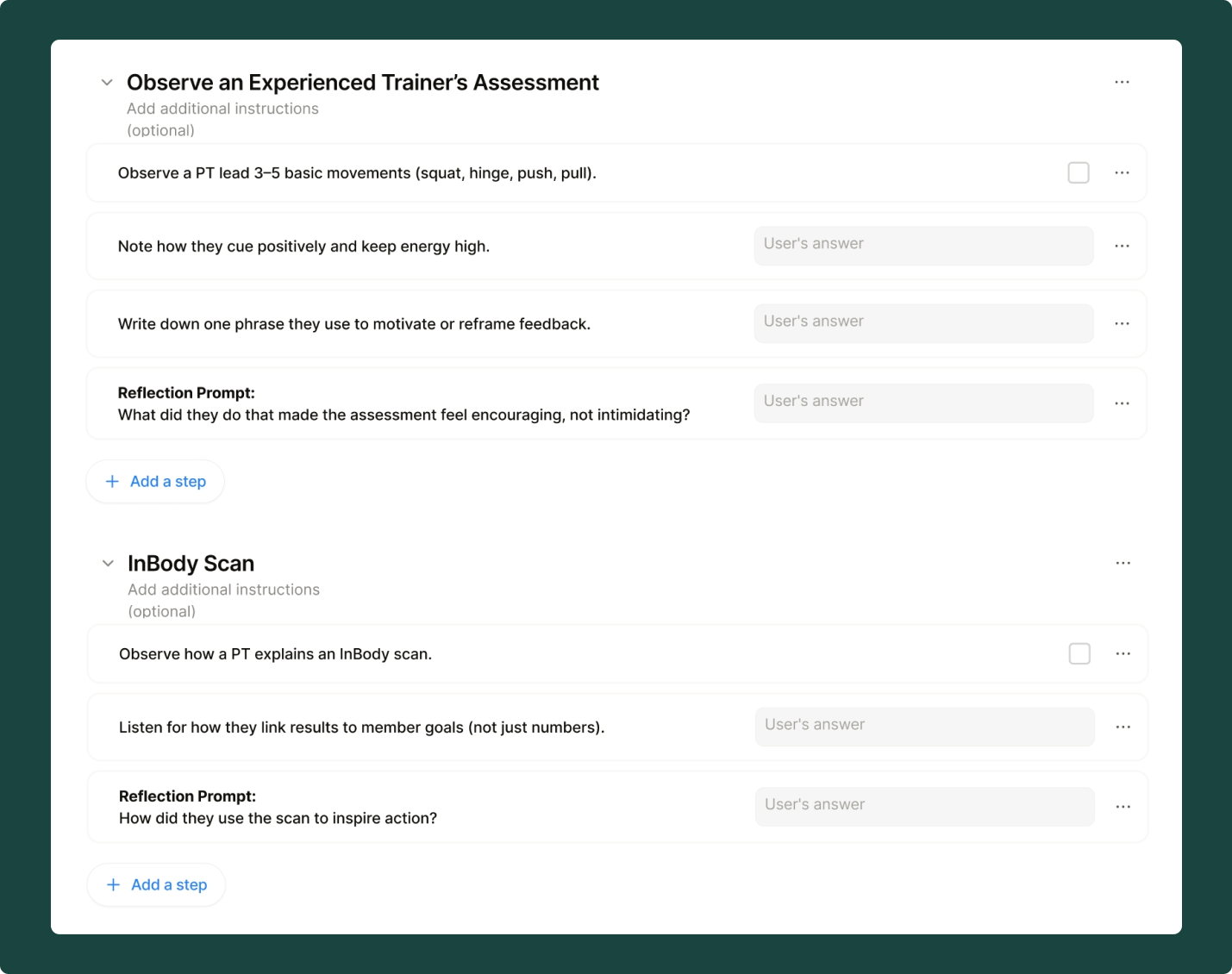
Her clearest example is a scavenger hunt in the first days of onboarding. A new trainer is an expert coach, but they don't yet know how a VASA club works as an engine for their own client base. Rather than hand them that map, VASA sends them to build it: find the KidCare staff and learn how they can send members their way, find the studio coaches and work out how those classes feed their programming. The trainer uncovers the gap, then fills it. Photos and written prompts keep the hunt accountable.
3. Use scenarios to practice judgment
At VASA, judgment is central to the personal trainer role, so training puts people into real decisions and lets them make the call.
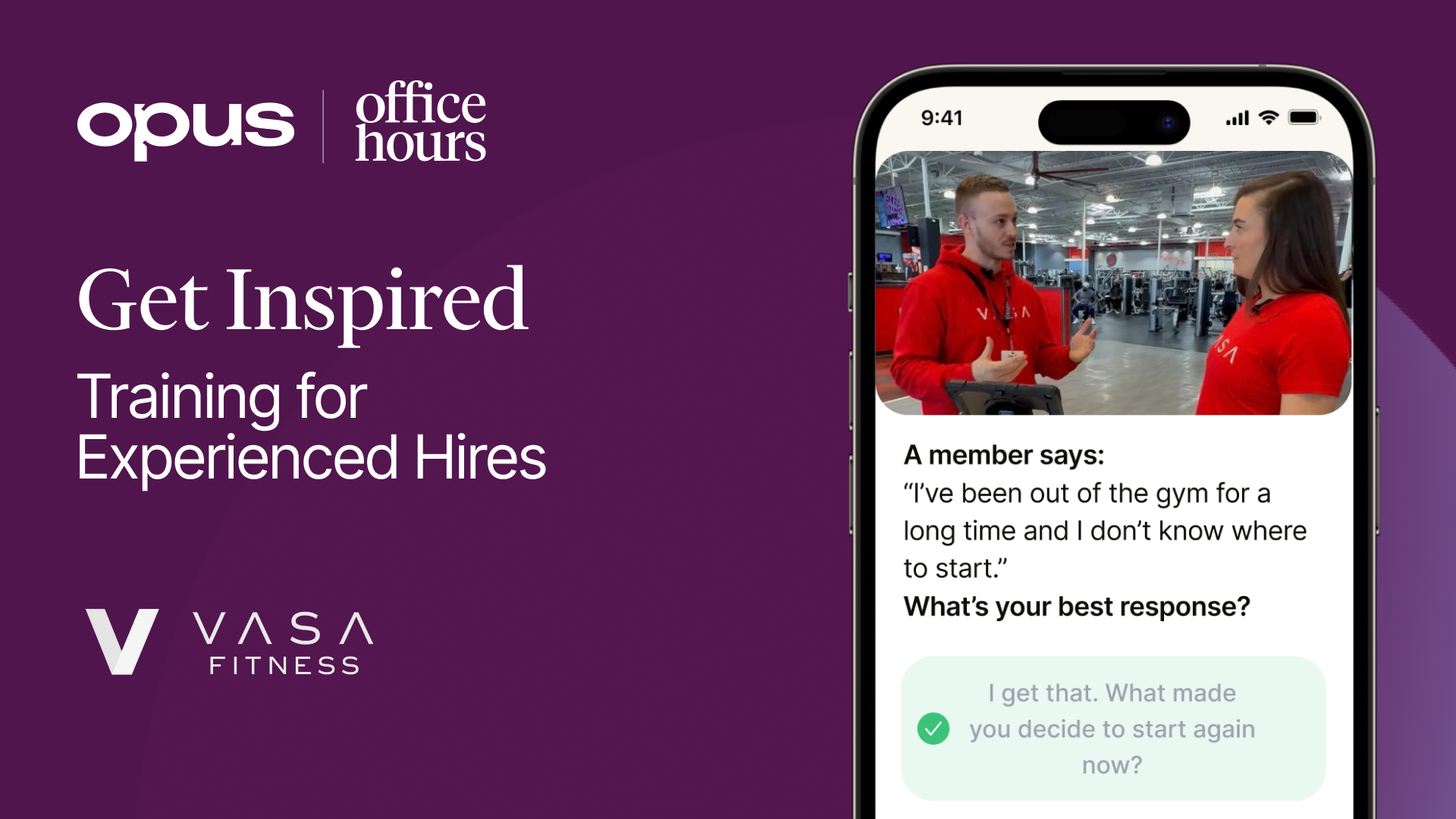
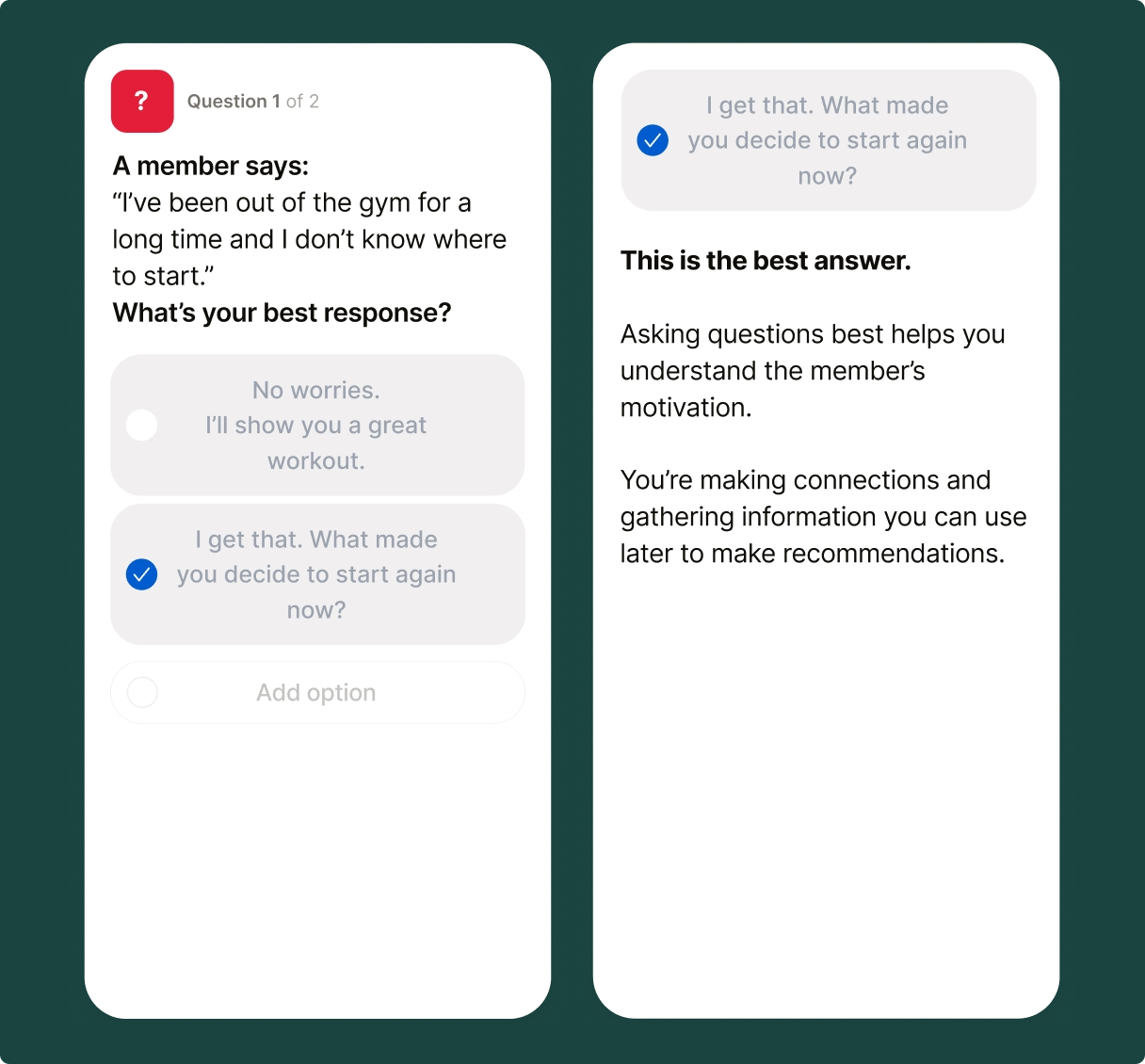
Scenario practice is core to VASA’s approach. In their Opus training module, trainers are presented with a realistic member situation with two technically correct options and asks them to choose; a follow-up peer video often models the stronger answer and explains why. The goal is to make an experienced trainer reconsider how they work today.
Much of that practice is also self-directed: trainers go do something, then reflect on it. They shadow peers, role-play with a colleague, and log their own reflections, without a manager signing off on every rep. Trusting experienced hires to own their practice fits the audience and scales across 74 gyms. Ongoing skill practice with personal training leads and organic peer learning on the floor round out the program.
VASA's results, and how to measure your own
Training with these approaches in mind has driven real impact, both for PT performance and for the brand as a whole. COO Chris Griebe has reported a 50% increase in team member retention since VASA brought on Opus. (Per industry panel at Connected: Health and Fitness Conference, 2026)
How do you measure impact like that in your own programs? Jimenez has a simple rule:
"You don't need a full ROI study. You need a before number, an after number, and an honest read on what changed in between."
— Shannon Jimenez
Measuring training's impact doesn't take a months-long study, a control group, or an attribution model. A clean before-and-after on one business metric is usually enough to make the case to leadership. Lightweight measurement has a hidden advantage, too: it's the kind you'll keep up when time is short.
Train experts like experts
Three moves carry the whole approach, and they transfer to any role where people arrive already skilled:
✅ Earn the right to teach via peers. Build credibility before you ask an expert to change how they work. Peer-to-peer learning is an excellent way to do this.
✅ Design training to surface gaps. Help people discover what they're missing, rather than re-teaching what they already know.
✅ Make it active and applied. Use scenarios and self-directed practice to build judgment, the skill that defines an expert role.
For VASA, the payoff is a faster, more consistent path to a fully productive trainer, and it compounds with every new gym they open. The same approach shapes how they think about retention: invest in people fully, and trust that most will choose to stay. As Jimenez puts it, "we're part of people's journey, whether that's with VASA or outside of it."
See it in action
Scan to experience VASA's personal trainer onboarding in Opus.

Explore more training examples here.
For more from Shannon on the practices behind this program, read the full Office Hours recap.
Or, if you're ready to build training that meets skilled people where they are, let's talk.

.jpeg)